
Common Pickleball Injuries: How to Prevent Falls, Shoulder Strain and Achilles Problems
The most common pickleball injuries, from falls and ankle sprains to Achilles, shoulder and elbow problems, and simple habits that reduce your risk.
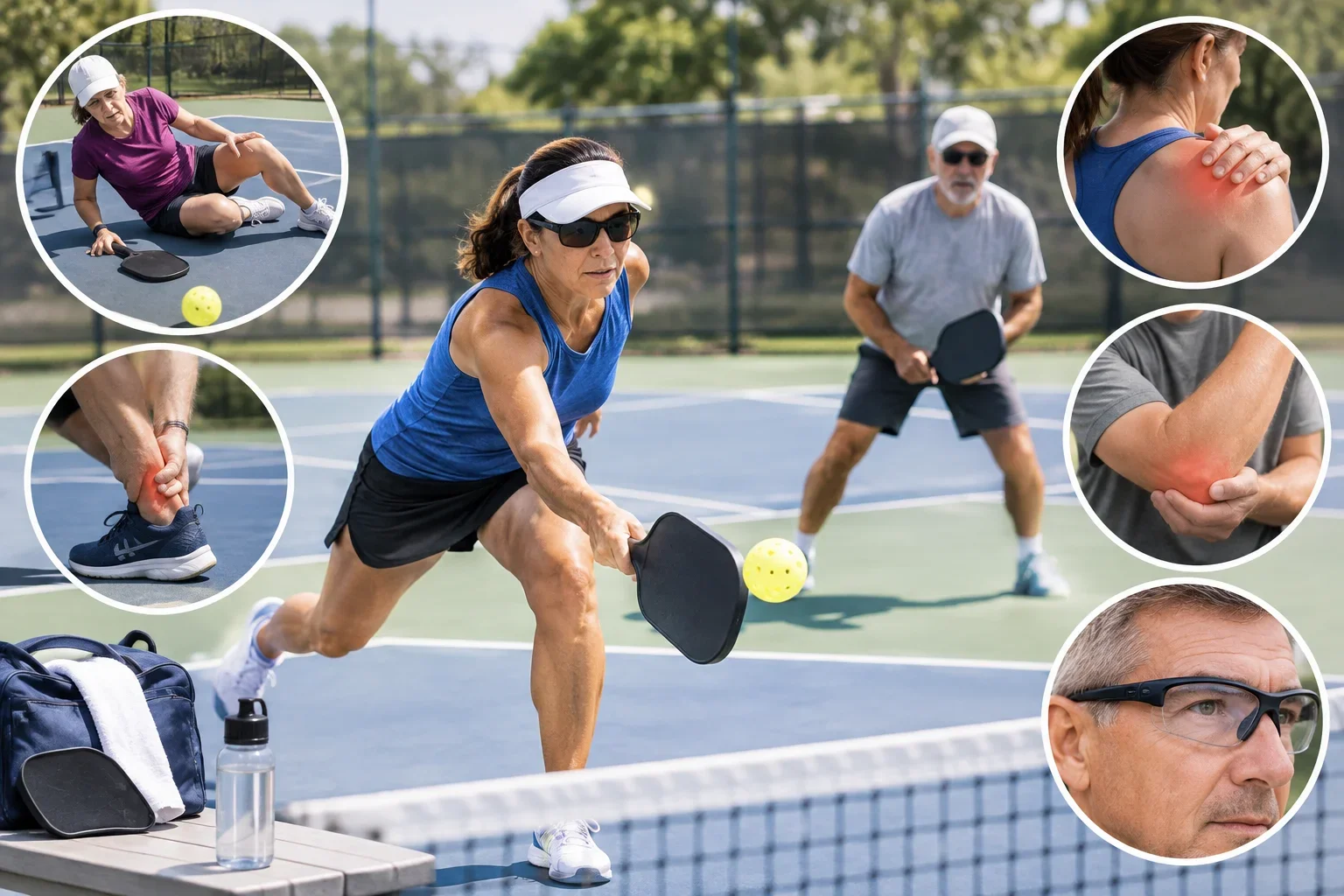
Image credit: ChatGPT
Pickleball is easy to learn, which is why so many adults take it up quickly. But it still involves quick stops, lunges and overhead shots, and many new players go from little activity to several games a week almost overnight. The most common injuries are falls, ankle sprains, calf and Achilles strains, shoulder strain and elbow pain. Most of them can be prevented with better habits.
This guide covers the most common pickleball injuries, why they happen, and simple ways to reduce your risk.
This is general information, not medical advice. If you have pain that doesn't improve, swelling, or an injury that affects how you walk or move, see a doctor or physiotherapist.
The most common injuries at a glance
| Injury | Common cause | Prevention |
|---|---|---|
| Falls (wrist, hip, head injuries) | Backpedaling for lobs, tripping on balls | Turn and move back, clear balls from the court |
| Ankle sprains | Quick sideways movement, wrong shoes | Court shoes, balance training |
| Calf strains and Achilles injuries | Sudden push-off, no warm-up | Warm-up, calf strengthening, gradual build-up |
| Shoulder strain | Overheads, repeated hard drives | Shoulder strengthening, good technique |
| Elbow pain ("pickleball elbow") | Gripping too tightly, too much play too soon | Relaxed grip, right paddle, rest |
| Knee pain | Lunging, twisting, playing on hard courts | Leg strength, footwork, good shoes |
| Eye injuries | Fast balls at the kitchen line | Protective eyewear |
Falls: the biggest risk
Falls are one of the most serious pickleball risks, especially for older players. Most happen while moving backward for a lob.
- Never backpedal for a lob. Turn sideways and shuffle or cross over, or let your partner take it. Often, the best decision is to let a good lob go.
- Call "ball on court" and stop play if a ball rolls onto your court. Stepping on a ball is a common cause of falls.
- Check the surface. Wet, dusty or sandy courts are slippery.
- Practice balance. Standing on one leg while brushing your teeth is a simple start.
Ankles, calves and Achilles
- Wear court shoes, not running shoes. Running shoes are built for forward movement and can roll on sideways moves. See Tennis Shoes 101; the same principles apply.
- Warm up before you play, with some light movement, side shuffles and calf raises. Our 10-minute warm-up works for pickleball too.
- Strengthen your calves with slow calf raises, two or three times a week.
- Build up gradually. Going from no exercise to playing every day is a common cause of Achilles problems.
A sudden pain or "pop" at the back of the lower leg, as if someone kicked you, can mean an Achilles tendon injury. Stop playing immediately and get it checked.
Shoulders and elbows
- Hold the paddle loosely, at about 3–4 out of 10. A tight grip sends more shock to your elbow.
- Choose the right paddle. Very light paddles can increase vibration. A midweight paddle with a thicker core is often easier on the arm. See How to Choose a Pickleball Paddle.
- Check your grip size. A handle that's too small or too big makes you squeeze harder.
- Strengthen your shoulder with light band exercises, such as external rotations.
- Use your legs and body on overheads and drives, not just your arm.
Elbow pain from pickleball is often the same condition as tennis elbow. See Tennis Elbow: Causes, Prevention, and the Gear That Actually Helps.
Eyes
At the kitchen line, balls can come at you fast and from close range. Protective sports eyewear is cheap insurance, especially for players who wear glasses or contacts, or have had eye surgery.
Build fitness off the court
Pickleball alone doesn't build all the strength and balance you need to play it safely. Two short strength sessions a week make a big difference. See Strength Training for Tennis and Pickleball Players Over 40.
When to stop and get help
- A fall that causes a head injury, or pain in a wrist or hip that doesn't go away
- Sudden calf or Achilles pain
- Swelling, or an inability to put weight on a joint
- Pain that gets worse or lasts more than a week or two
- Chest pain, shortness of breath or dizziness during play. Stop immediately and get emergency help.
FAQ
Is pickleball safer than tennis?
It involves less running, but injuries are still common, partly because many players are older or new to sport. The same precautions apply to both.
How often should I play when starting out?
Start with two or three sessions a week, with a rest day between, and increase gradually as your body adapts.
Do I need special shoes?
Court shoes, designed for tennis, pickleball or indoor court sports, are strongly recommended for their lateral support.
Keep learning
- New to the game? Start with Pickleball 101.
- Play smarter, not harder, with the soft game. See Third-Shot Drop vs. Drive.
- Find a beginner-friendly open play session near you.
Comments
No approved comments yet.
Log in or sign up to join the conversation.