

How Often Should You Restring Your Racket? (And What It Costs)
Learn when to restring your tennis racket, how string type and playing frequency affect the timeline, signs of worn strings, and typical restringing costs.
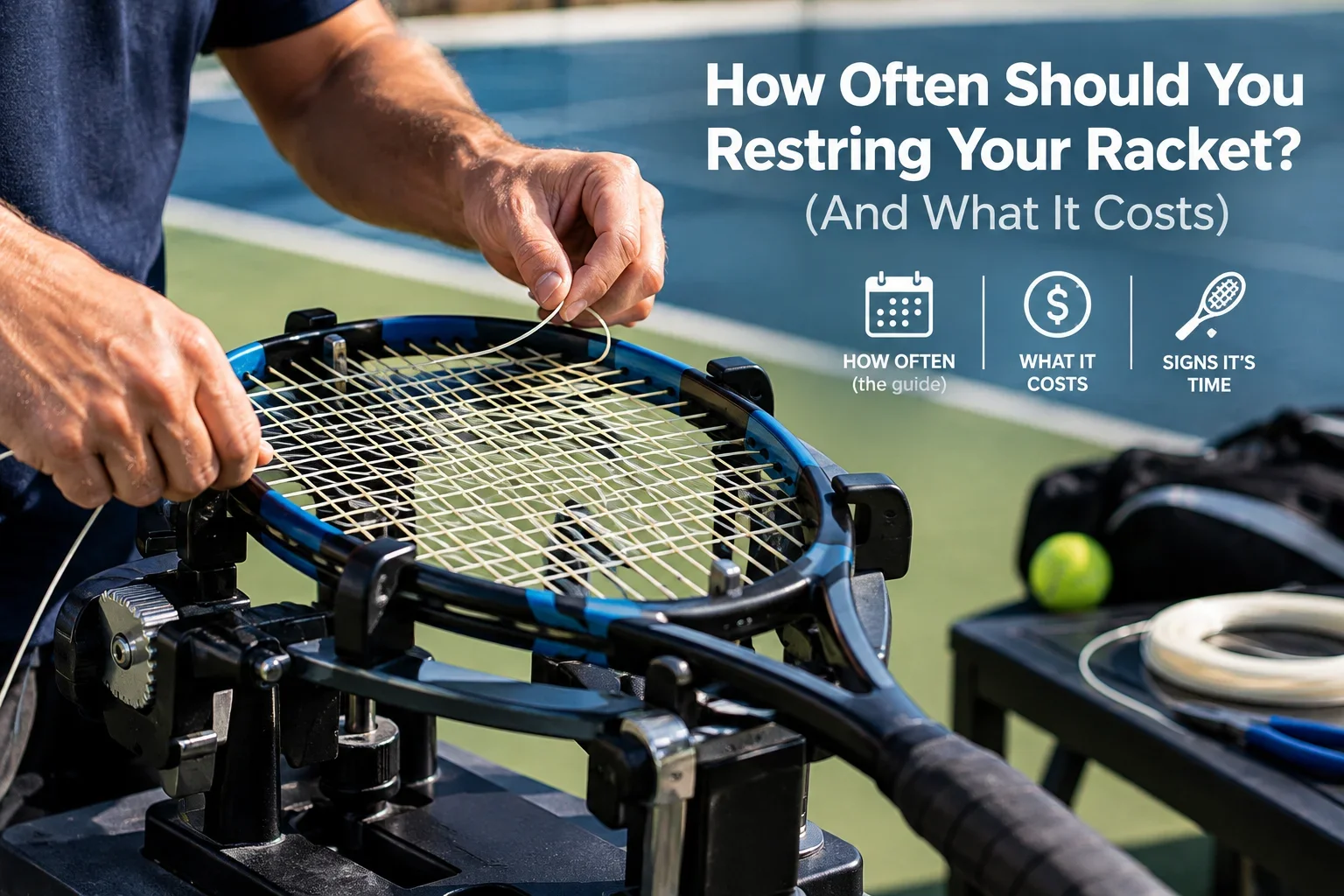
Image credit: ChatGPT
Stringing is the most overlooked piece of tennis equipment maintenance — most players replace their shoes long before they think about their strings, even though worn-out strings quietly cost you power, control, and feel on every shot. Here’s how to tell when it’s time, and what you should expect to pay.
Why Strings Wear Out (Even If They Don’t Break)
Strings lose tension every time you hit the ball, long before they actually snap. As tension drops, the string bed gets more trampoline-like — which sounds good in theory, but in practice it means less control and less predictable ball response. A string bed can look completely intact and still be performing far below where it should.
Two separate things determine when to restring:
- Tension loss — strings gradually go “dead” even without visible damage.
- Physical wear — fraying, notching (grooves where the strings cross), or breakage.
Most players only restring after a string snaps, which means they’re playing on dead strings for weeks or months beforehand without realizing it.
The General Rule of Thumb
The most commonly cited guideline among coaches and stringers:
Restring as many times per year as you play per week.
So if you play three times a week, restring roughly every 4 months (about 3 times a year). If you play daily, you’re looking at restringing every 2–3 weeks for serious/competitive play.
This is a rough guideline, not a law — actual frequency depends heavily on string type and playing style (see below).
What Changes the Timeline
String material
- Natural gut: best feel and tension retention, but priciest and least durable against abrasion.
- Multifilament: softer, more arm-friendly, moderate tension retention — similar overall lifespan to gut for most players.
- Polyester: very durable against breakage but loses tension fastest — many players restring polyester on a fixed schedule even if it never breaks, specifically because of tension loss rather than wear.
- Synthetic gut: budget-friendly, shortest lifespan of the main categories, but perfectly fine for casual/recreational play.
- Playing style — heavy topspin players wear through strings (especially polyester) faster due to more string-on-string friction.
- String gauge — thinner strings (higher gauge number) offer more feel but wear out and break faster than thicker gauges.
- Climate/storage — leaving a racket in a hot car accelerates tension loss regardless of string type.
Signs It’s Time to Restring
- Strings look fuzzy, notched, or visibly frayed where they cross
- The ball feels like it’s “dying” off the strings, with noticeably less pop
- You’ve lost consistent control — balls sailing long or feeling unpredictable
- It’s simply been longer than 3 months since your last restring and you play regularly, even without visible wear
- Obviously: a broken string
What Restringing Costs
Pricing depends on labor plus the string itself, and varies by shop and region:
| Component | Typical Cost |
|---|---|
| Labor only (if you supply string) | $15–$25 |
| Budget synthetic gut string | $8–$15 |
| Multifilament string | $15–$25 |
| Polyester string | $12–$20 |
| Natural gut string | $35–$60+ |
| Full restring (labor + string), budget | $25–$40 |
| Full restring (labor + string), premium | $50–$90+ |
Racket shops and clubs typically charge on the higher end; mail-in stringing services or big-box sporting goods stores are often cheaper but slower.
DIY Stringing
A personal stringing machine runs anywhere from $150 (basic drop-weight) to $500+ (electronic/constant-pull). It only pays off if you restring frequently enough — generally worth it for players restringing more than once a month, or anyone stringing for a team/family.
How to Make Strings Last Longer
- Avoid leaving your racket in a hot car or direct sun — heat accelerates tension loss dramatically.
- Loosen string tension slightly if you’re not competing, which reduces stress on the string bed between sessions.
- Wipe down strings after sweaty sessions — moisture and dirt accelerate fraying.
- Rotate between two strung rackets if you play very frequently, splitting wear across both.
Bottom Line
If you’re a casual player hitting once a week, restringing 2–3 times a year is plenty. If you play several times a week or competitively, restring every 1–3 months regardless of whether a string has actually broken — tension loss happens well before failure, and playing on dead strings is a quiet drag on your whole game. Budget accordingly: a $25–$40 restring every few months is a lot cheaper than it sounds once you spread it across a season.
Comments
No approved comments yet.
Log in or sign up to join the conversation.