
How to Find Free Public Tennis and Pickleball Courts Near You
Where to find free public tennis and pickleball courts, how to tell if a court needs a reservation, court-sharing etiquette and how to get a game at busy courts.
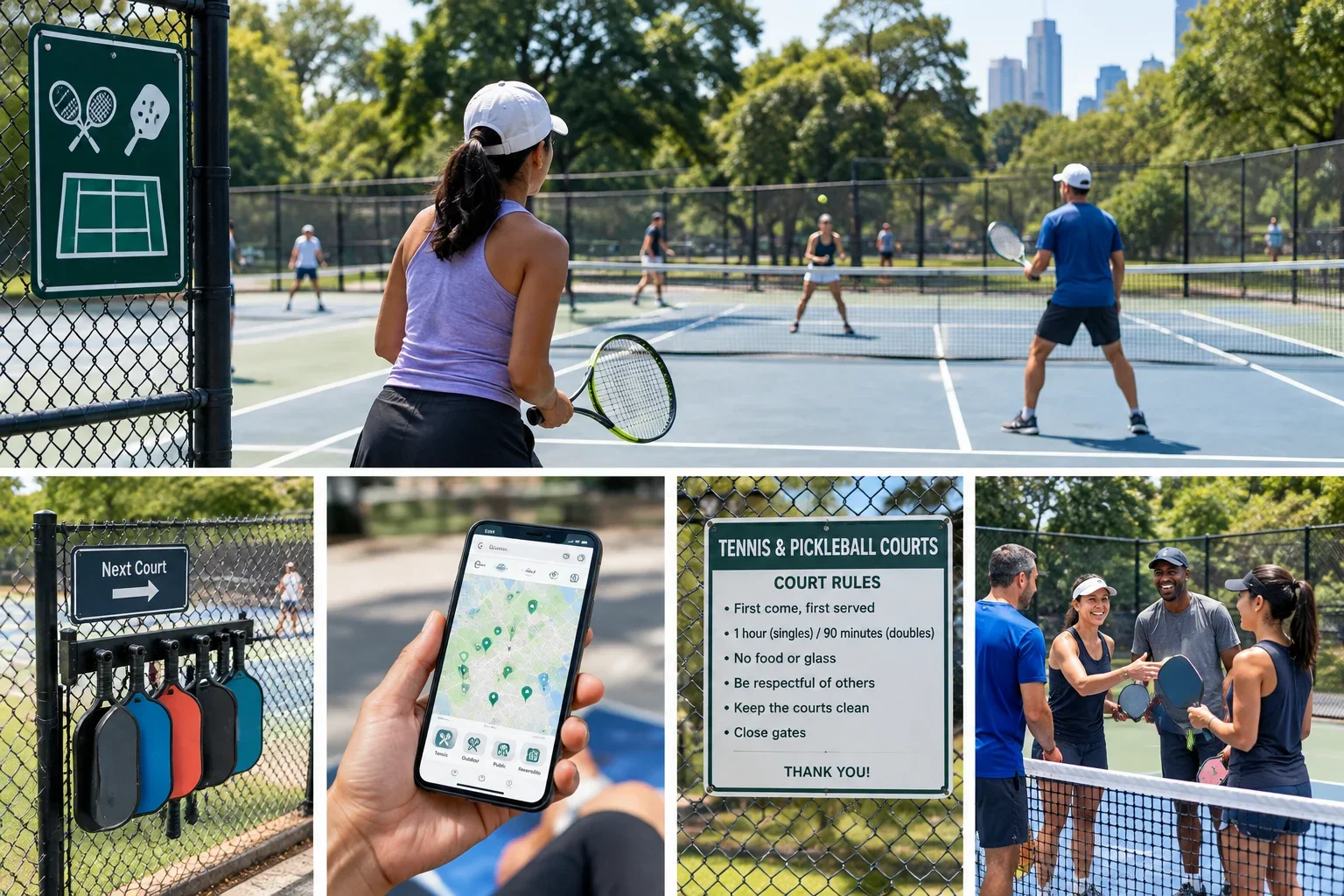
Image credit: ChatGPT
Most cities have free public tennis and pickleball courts. They're just not always easy to find, and the best ones get busy at peak times. Parks departments, schools, community centers and recreation districts all run courts, and many tennis courts now have pickleball lines too.
This guide covers where to look, how to tell whether a court is free or needs a reservation, how to share courts fairly with other players, and how to get a game at a busy court.
Where to find public courts
| Where | What to expect |
|---|---|
| City and county parks | The most common free courts. Often first come, first served, sometimes with lights and a reservation option. |
| Public schools and colleges | Often open to the public outside school hours. Check posted signs and the district's rules. |
| Community and recreation centers | Indoor and outdoor courts. May be free for residents, or charge a small fee or membership. |
| Public tennis centers | City-run centers with booking, lessons and leagues. Usually charge a court fee, but cheaper than private clubs. |
| Shared tennis and pickleball courts | Tennis courts with pickleball lines added, sometimes with set times for each sport. |
The fastest way to search is our court finder or the court map. You can filter by sport, and see whether a court is indoor or outdoor, public, lit or reservable, where we have that information. Know a court that's missing? Members can add it so other players can find it.
Free, fee or reservation? How to tell
Look for these clues before you go:
- Posted signs at the court usually list hours, time limits, reservation rules and whether lights cost anything.
- The parks department website often lists which courts are first come, first served and which can be booked.
- Booking apps or city portals. Many cities now take court reservations online. A court that shows up in the city's booking system may still be free when it isn't reserved.
- Lights may be free, coin-operated, on a timer or by reservation only.
If a court is reserved but nobody shows up, local rules often let walk-ups use it after a set time, such as 10–15 minutes past the start. Check the posted rules instead of assuming.
Court-sharing etiquette
Public courts work because players share them fairly. The common rules:
- Follow posted time limits. If there are none, a common courtesy is about an hour of singles or 90 minutes of doubles when others are waiting.
- Ask before you join or take over a court. "Are you nearly done?" goes a long way.
- Don't walk behind a court during a point. Wait for a break, then cross quickly.
- Return stray balls between points, and say thanks when someone returns yours.
- Leave the court clean and close gates behind you.
Waiting for a pickleball court
Busy pickleball courts often use a paddle rack or line-up system. You put your paddle in the next slot, and when a game ends, the next four paddles go on court. Ask the regulars how the local system works. It's usually explained on a sign, or by the first person you ask.
Shared tennis and pickleball courts
Many cities have added pickleball lines to tennis courts. That's great for access, but it can cause friction. A few tips for keeping the peace:
- Check for set times. Some courts have tennis-only and pickleball-only hours.
- Bring a portable net if the court has pickleball lines but no permanent net, and take it down when you're done.
- Mind the noise. Pickleball is louder. Courts near homes may have quiet-paddle rules or limited hours.
- Be welcoming. Both sports need the courts. Players who help others learn the local system make shared courts work for everyone.
Thinking of trying the other sport? Pickleball vs. Tennis covers what transfers and what doesn't.
How to get a game at a busy court
- Go at off-peak times. Weekday mornings and early afternoons are usually quiet. Weekday evenings and weekend mornings are busiest.
- Join open play. Many public courts have regular drop-in sessions. Find them on our open play page.
- Find a regular partner at your level, so you can book or claim a court together. Use our player directory, or read How to Find Partners at Your Level.
- Join a league or ladder. Organized play often comes with reserved court time. See League or Ladder?
What to bring to a public court
- A fresh can of balls (tennis) or a couple of outdoor balls (pickleball)
- Water. Many parks don't have fountains, or turn them off in winter.
- A towel, sunscreen and a hat
- A portable net for pickleball, if the court doesn't have one
- A phone with your reservation confirmation, if you booked
FAQ
Are public tennis courts really free?
Many are, especially in city parks. Some charge for reservations, lights or peak times, and public tennis centers usually charge a court fee. Check the posted signs or the city's website.
Can I play pickleball on a tennis court without lines?
Ask the local parks department. Some allow temporary chalk or tape lines and a portable net, and others don't. Never use permanent paint without permission.
Can I give lessons on a public court?
Many cities require a permit or license for paid lessons on public courts. Check before you start coaching there.
How can I find courts when I'm traveling?
Use our court map to search any city, and see Planning a Tennis Trip for more travel tips.
Comments
No approved comments yet.
Log in or sign up to join the conversation.