
Pickleball Paddle Care: Cleaning, Grips, Edge Guards and When to Replace
Keep your pickleball paddle playing well: clean the face, replace grips, protect the edges, avoid heat, and spot the signs that it is time to replace it.
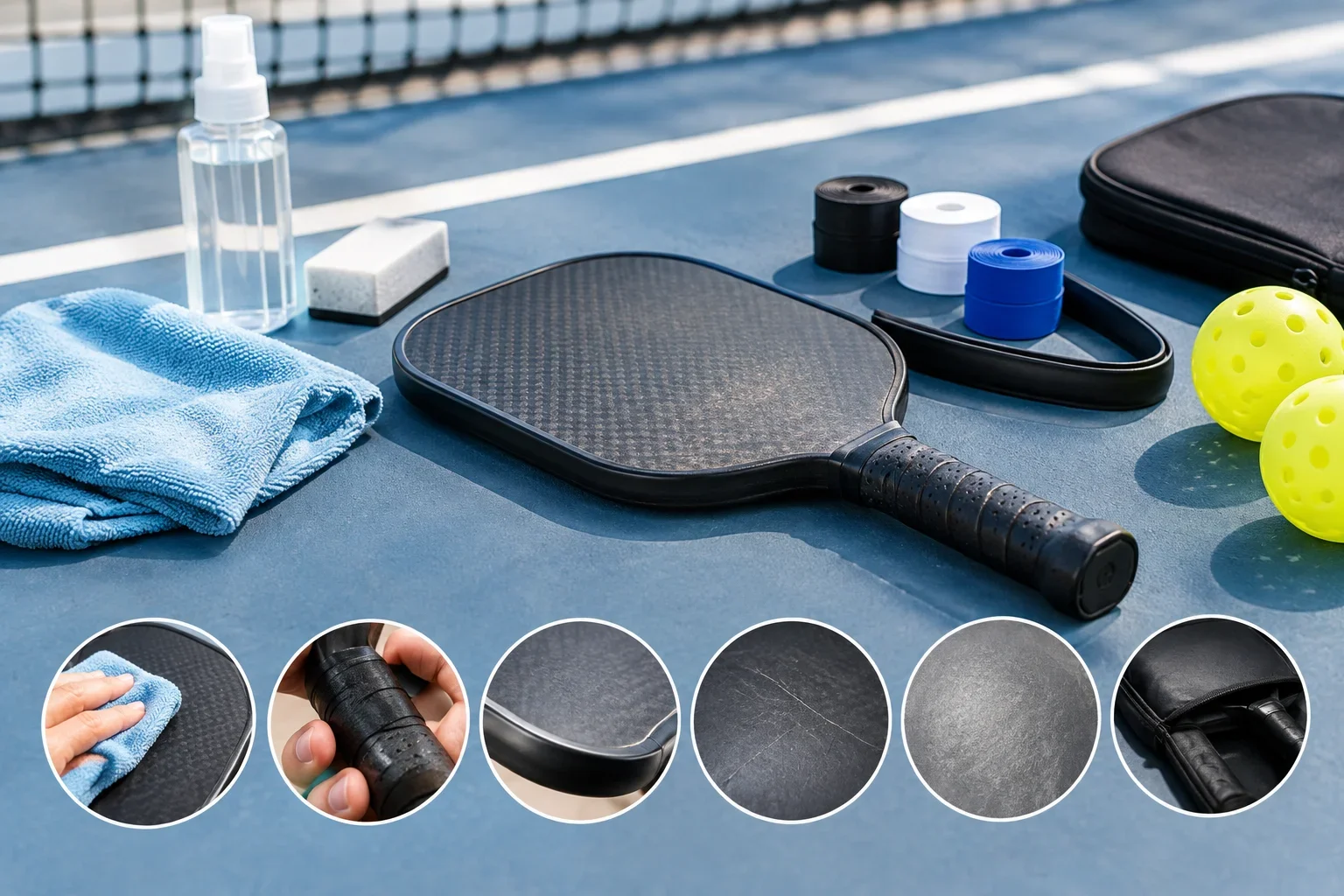
Image credit: ChatGPT
A good pickleball paddle isn't cheap, and a little care helps it play well for longer. Most of it is simple: keep the face clean, replace the grip, protect the edges, and keep the paddle out of extreme heat. Knowing the signs of a worn-out paddle also tells you when it's time for a new one.
The short answer
- Clean the face regularly, especially textured or raw carbon faces.
- Replace the overgrip when it gets slick or worn.
- Protect the edges from scrapes and impacts.
- Avoid extreme heat and cold, including hot cars.
- Replace the paddle when you notice dead spots, cracks, rattling or a big drop in feel.
Cleaning the face
Dust, ball residue and sweat build up on the face, especially on textured and raw carbon surfaces. This can reduce grip on the ball, and so spin.
- Wipe the face with a damp microfiber cloth after play, then dry it.
- For textured faces, a paddle cleaning eraser can remove residue. Use it gently, following the manufacturer's advice.
- Avoid harsh chemicals and solvents, which can damage the surface.
Texture wears down over time, no matter how well you clean it. A paddle that spun the ball well when new will feel smoother after months of regular play. That's normal.
Grips
- Overgrips are cheap, and they give you a fresh, tacky or absorbent feel. Replace them when they get slick, usually every few weeks for frequent players.
- Base grips can be replaced when they're worn or torn.
- Grip size: each overgrip adds a little thickness. If your handle feels too small, an extra overgrip can help.
Protecting the edges
- Most paddles have an edge guard. If it's cracked or peeling, edge guard tape can protect the edge.
- Avoid scraping the paddle on the court when picking up balls, or when reaching for low shots.
- Don't tap the paddle hard on the ground or net post.
Heat, cold and storage
- Don't leave your paddle in a hot car. Extreme heat can weaken adhesives and affect the core and face.
- Store it at room temperature, in a paddle cover or bag.
- Keep it dry. Wipe it down if it gets wet.
Modifications
Many players customize their paddles by adding weight tape to the edge or changing the grip. For sanctioned play, USA Pickleball limits what can be changed. You can't alter the playing surface, for example. Check the current equipment rules before modifying a paddle for tournaments.
Signs it's time to replace your paddle
| Sign | What it may mean |
|---|---|
| Dead spots where the ball comes off weakly | Core damage, sometimes called "core crush" |
| A rattling sound | Loose material inside, or a broken core |
| Cracks in the face or edge | Structural damage; it may also no longer be legal |
| Bubbling or separating face | Delamination (the face separating from the core) |
| Much less spin than before | The surface texture has worn smooth |
| Sudden change in sound or "pop" | Changes in the core or face |
Check the warranty before buying a replacement. Many brands cover manufacturing defects, such as delamination, for a set period.
How long does a paddle last?
It depends on how often and how hard you play, and on the paddle's construction. Casual players may get several years from a paddle. Players who play several times a week may notice a difference within a year.
FAQ
Can I fix a cracked paddle?
Not reliably. A cracked paddle may play unpredictably and may not be legal for sanctioned play. Replace it.
Should I have a backup paddle?
If you play leagues or tournaments, yes. Ideally, the same model, so the feel is consistent.
When I replace my paddle, what should I buy?
See How to Choose a Pickleball Paddle, and use our paddle advisor to build a shortlist.
Keep learning
- Browse and compare paddles in our paddle database.
- Choose the right ball for your court: Indoor vs. Outdoor Pickleballs.
- Customize a tennis racquet instead? See Tennis Racquet Customization.
Comments
No approved comments yet.
Log in or sign up to join the conversation.