
Playing Tennis and Pickleball in the Heat: Hydration, Timing and Warning Signs
Stay safe playing tennis and pickleball in hot weather: when to play, how to hydrate, cooling tips, and the warning signs of heat exhaustion and heat stroke.
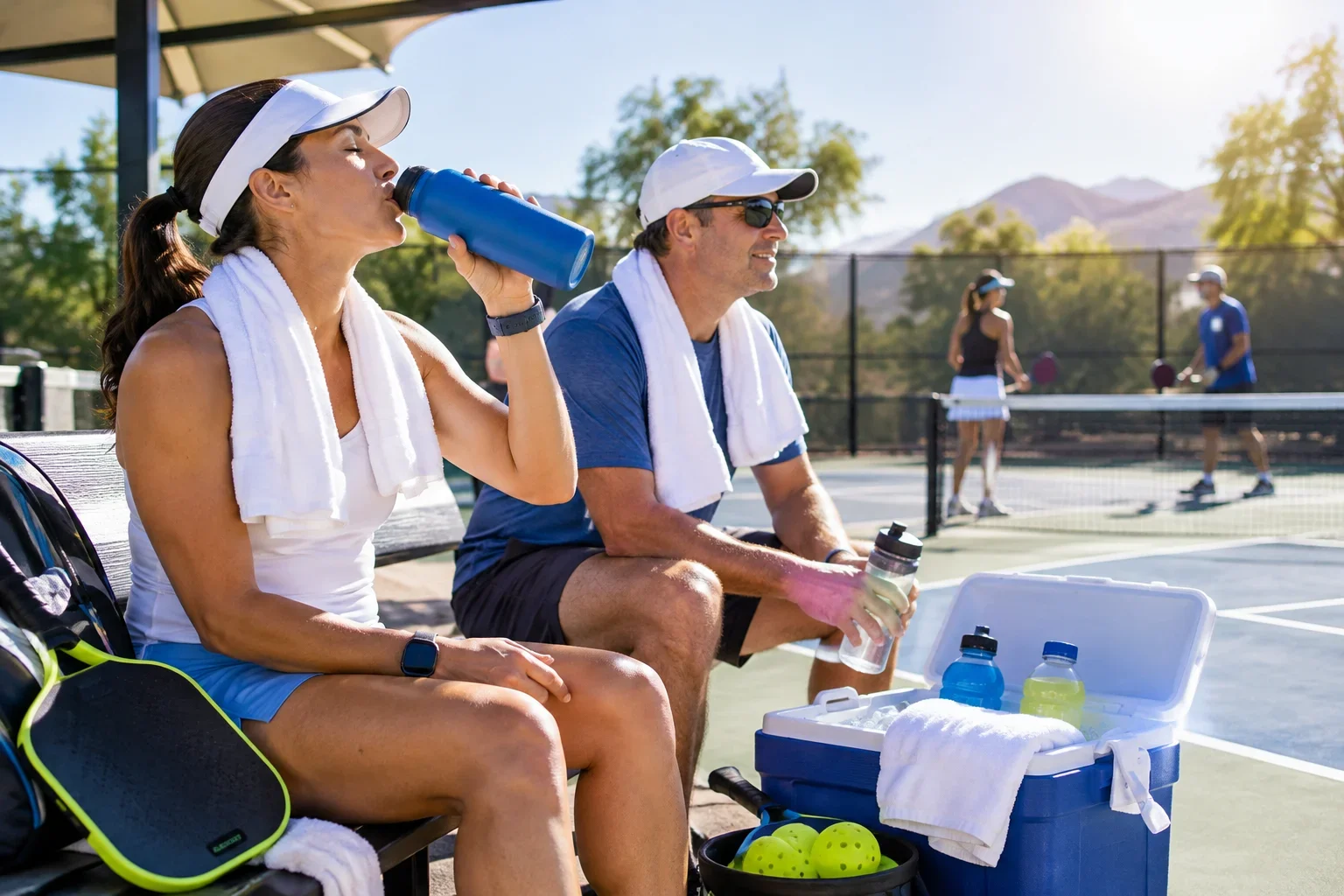
Image credit: ChatGPT
Hot-weather tennis and pickleball can be safe and fun if you plan for it. Play at cooler times of day, drink before you're thirsty, take your breaks in the shade, and learn the warning signs of heat illness. Heat exhaustion can come on quickly during long matches, and heat stroke is a medical emergency.
This guide covers how to prepare, how to stay cool during play, how to hydrate, and what to do if you or someone you're playing with starts to struggle.
This is general safety information, not medical advice. If you have a heart condition, high blood pressure, diabetes, or take medications that affect heat tolerance or fluid balance, ask your doctor about playing in the heat.
The short answer
- Play early or late. Avoid the hottest hours, usually late morning to late afternoon.
- Hydrate before, during and after. Drink at every changeover, and add electrolytes for long sessions.
- Cool down at breaks. Shade, cold towels, and ice on your neck and wrists.
- Build up gradually. Give your body one to two weeks to adapt to hot weather.
- Know the warning signs and stop early. No match is worth heat stroke.
Before you play
- Check the heat index, not just the temperature. Humidity makes heat much harder on the body because sweat evaporates less.
- Drink water in the hours before you play, so you start hydrated. Pale yellow urine is a good sign.
- Eat a light meal 2–3 hours before, and include some salt if you sweat heavily.
- Sleep well and skip alcohol the night before. Both affect how well you handle heat.
- Wear light-colored, loose, moisture-wicking clothes, a hat or visor, sunglasses and sunscreen.
- Pack a cooler with water, a sports drink and towels you can wet with ice water.
During play
- Drink at every changeover, even if you're not thirsty. Thirst is a late signal.
- Take breaks in the shade if there is any, and use them fully.
- Cool your skin. Put a cold, wet towel or ice on your neck, armpits, wrists and head.
- Shorten the format if it's very hot. Play pro sets, timed games or a match tiebreak instead of a third set.
- Watch your partner and opponents too. People often don't notice their own symptoms.
An easy hydration check: weigh yourself before and after a long session. Losing more than about 2% of your body weight in sweat (3 lb for a 150 lb person) means you need to drink more during play next time.
Water or sports drink?
| Session | What to drink |
|---|---|
| Under about an hour, moderate heat | Water is usually enough |
| Over an hour, or very hot or humid | Water plus a sports drink or electrolyte tablets to replace salt |
| Heavy sweater or salty sweat (white marks on clothes) | Electrolytes are especially important |
Don't overdo it either. Drinking very large amounts of plain water over many hours, without replacing salt, can be dangerous too. Drink steadily, not excessively.
After you play
- Keep drinking. Replace about 16–24 oz (roughly 0.5–0.7 L) of fluid for every pound of body weight lost.
- Eat a meal or snack with some salt and carbohydrate.
- Cool down in the shade or air conditioning before driving home.
Know the warning signs
| Heat exhaustion | Heat stroke (emergency) | |
|---|---|---|
| Signs | Heavy sweating; cool, pale or clammy skin; fast, weak pulse; nausea or vomiting; muscle cramps; tiredness or weakness; dizziness; headache; fainting | High body temperature (103°F or higher); hot, red skin, which may be dry or damp; fast, strong pulse; headache; dizziness; nausea; confusion; losing consciousness |
| What to do | Stop playing. Move to a cool place, loosen clothing, apply cool, wet cloths and sip water. Get medical help if you vomit, if symptoms get worse, or if they last more than an hour. | Call 911 (or your local emergency number). Move the person somewhere cooler and cool them quickly with cool cloths or water. Don't give them anything to drink. |
Signs of heat illness are based on CDC guidance. Heat cramps, which are painful muscle spasms during heavy sweating, are an early warning sign. Stop, rest, drink and stretch gently before continuing.
Who's at higher risk
- Older adults and children
- People who aren't used to the heat yet, such as early in summer or on a trip to a hot place
- People who are ill, have recently been ill or are short on sleep
- People taking certain medications, such as some blood pressure medicines, diuretics and antihistamines
- Anyone who has had heat illness before
Getting used to the heat
Your body adapts to heat over about one to two weeks of regular exposure. You start sweating earlier, and your heart rate in the heat comes down. Start with shorter, lighter sessions in the heat and increase gradually. You'll lose some of this adaptation after a week or two away from hot weather.
Equipment in the heat
- Strings: heat makes strings play livelier. You may notice balls flying a little longer.
- Balls: tennis balls bounce higher in the heat. Pickleballs get softer and bouncier, while outdoor pickleballs can crack in the cold.
- Grips: sweat makes grips slippery. Bring spare overgrips or use a towel at changeovers.
- Shoes: hard courts get very hot, and soles wear faster. See Tennis Shoes 101.
FAQ
How hot is too hot to play?
There's no single number, because humidity, sun, wind, fitness and health all matter. Many tournaments use heat rules based on the heat index or "wet bulb" temperature. Use those as a guide, and stop if anyone shows signs of heat illness.
Are salt tablets a good idea?
Electrolyte drinks or tablets made for sport are usually a better choice, because they're balanced and easier to dose. Ask a doctor if you have blood pressure or kidney issues.
Is indoor play safer in summer?
Usually, if the facility is air-conditioned. Some indoor courts get hot and humid, so the same precautions apply.
Keep learning
- Prepare your body for hard play with our 10-minute warm-up.
- Find indoor or lighted courts for cooler playing times with our court finder.
- Join an early-morning or evening open play session.
Comments
No approved comments yet.
Log in or sign up to join the conversation.