
Tennis Elbow: Causes, Prevention, and the Gear That Actually Helps
Explore the causes of tennis elbow, practical prevention habits, and how racket specs, strings, grip size, and counterforce straps can affect elbow strain.
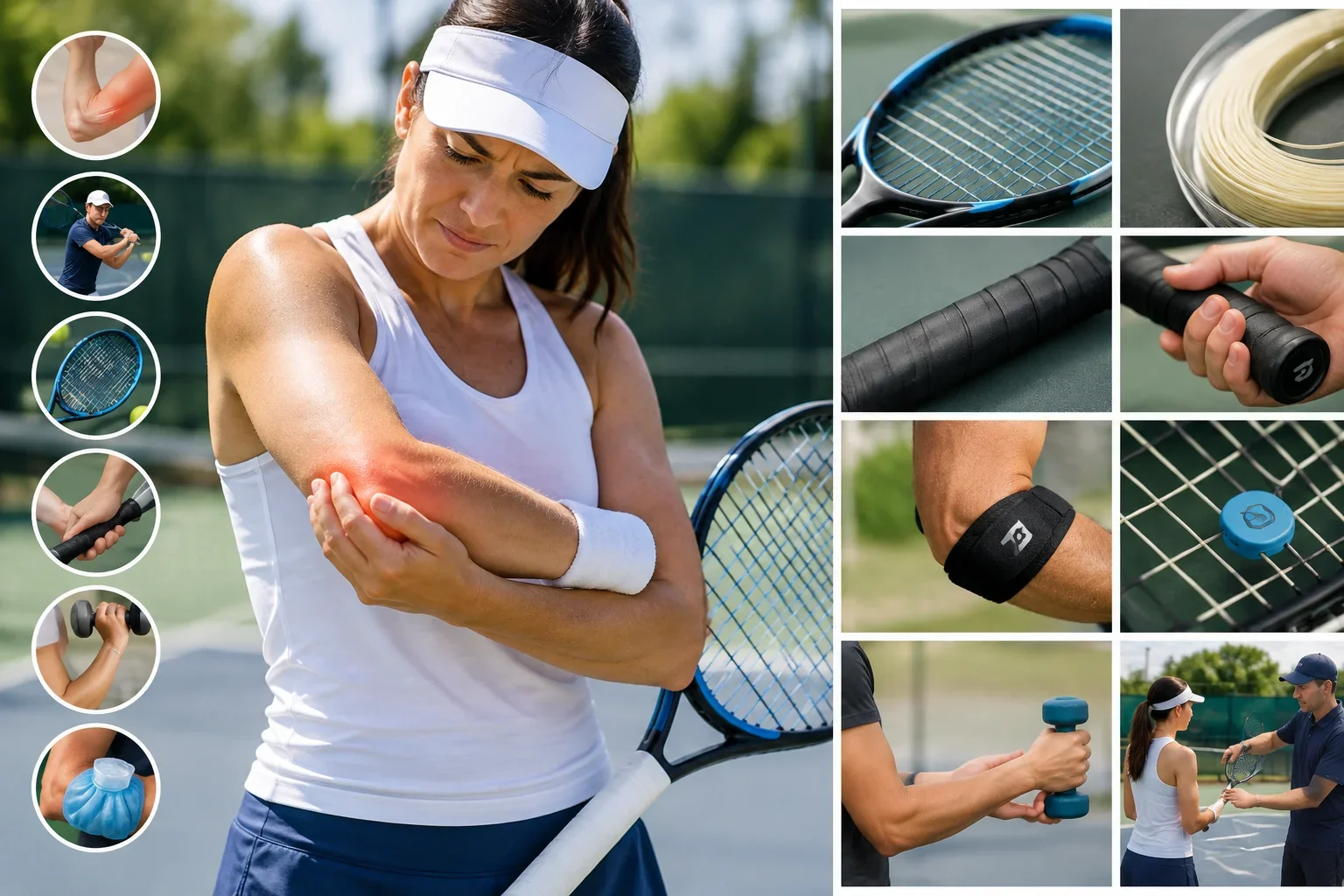
Image credit: ChatGPT
If you’ve ever felt a sharp, nagging pain on the outside of your elbow after a long match — or even just reaching for a doorknob — there’s a good chance you’ve met tennis elbow. Despite the name, it affects far more non-tennis players than tennis players, but it’s common enough among racket-sport athletes that the name stuck. Here’s what causes it, how to avoid it, and which gear choices genuinely make a difference.
What Is Tennis Elbow, Exactly?
Tennis elbow (lateral epicondylitis) is inflammation or micro-tearing of the tendons that attach your forearm muscles to the bony bump on the outside of your elbow. Every time you grip, twist, or extend your wrist, those tendons do work — and repetitive strain is what breaks them down over time. It’s technically a tendon overuse injury, not a tennis-specific one, but the repetitive wrist-extension motion of a tennis stroke (especially a mishit backhand) is a textbook cause.
Common Causes
- Repetitive wrist extension and gripping — the single biggest driver, whether from tennis, painting, typing, or using hand tools.
- Poor stroke mechanics — leading with the elbow on a backhand, or using the wrist instead of the shoulder/torso to generate power.
- Equipment mismatches — a racket that’s too stiff, too heavy, or strung too tight forces your forearm to absorb shock it shouldn’t have to.
- Grip size issues — a grip that’s too small makes you squeeze harder than necessary; too large and you lose control, both increasing strain.
- Sudden increases in play volume — jumping from occasional weekend play to daily sessions without conditioning.
- Weak forearm and shoulder muscles — when the big muscles don’t do their share, the small tendons in the elbow compensate.
Prevention: What Actually Works
- Fix your technique first. Gear can reduce strain, but it can’t fix a mechanically bad backhand. If you’re newer to the game, a few lessons focused on stroke mechanics will do more for your elbow than any product on this list.
- Warm up and stretch the forearm. Wrist flexor/extensor stretches and a light warm-up before hitting reduce tendon strain significantly.
- Strengthen the forearm gradually. Eccentric wrist-extension exercises (lowering a light weight slowly) are the most evidence-backed way to build tendon resilience.
- Progress your playing volume slowly. Treat it like training for a race — increase frequency and intensity incrementally, not all at once.
- Ice after heavy sessions, especially if you already feel soreness, to control inflammation before it becomes chronic.
- Know when to rest. Playing through sharp pain turns a minor strain into a long-term injury. If pain lingers more than a few days or worsens with play, see a doctor or physical therapist before continuing.
The Gear That Actually Helps
Not all “tennis elbow gear” on the market is backed by real evidence — but a few categories consistently make a measurable difference:
Racket Specs
- Lower stiffness (RA rating): A more flexible racket frame absorbs more shock instead of transferring it to your arm. This matters more than almost any other spec.
- Head-light or balanced weight distribution: Reduces the torque your arm absorbs on off-center hits.
- Larger head size: A bigger sweet spot means more forgiveness on mishits — which is exactly when elbow strain spikes.
Strings and Tension
- Multifilament or natural gut strings: Both flex and dampen shock far better than stiff polyester strings.
- Lower string tension: Dropping tension by even a few pounds noticeably softens impact shock. This is one of the cheapest, most effective changes a player can make.
Grip Size and Material
- Correct grip size: Too small forces excess gripping force; a quick measurement (palm to ring fingertip) will get you in the right range.
- Cushioned overgrips: Add shock absorption and reduce how hard you need to squeeze.
Counterforce Braces (Tennis Elbow Straps)
A strap worn just below the elbow redistributes force away from the inflamed tendon attachment point. These have decent clinical support for symptom relief during activity — though they manage symptoms rather than fix the underlying cause.
Vibration Dampeners
Modest benefit on their own, but a reasonable low-cost addition on top of the changes above (string tension and racket flex matter more).
What to Skip
- Compression sleeves with no counterforce strap component: comfortable, but there’s little evidence they reduce tendon load.
- Ultra-stiff “control” strings marketed for power players: great for spin and control, bad for anyone already dealing with elbow pain.
The Bottom Line
Tennis elbow is almost always a combination of technique, overuse, and equipment working against you — rarely just one factor. Fixing your stroke mechanics and easing into higher play volumes will do the heavy lifting, while a more flexible racket, lower string tension, and a properly sized grip remove a lot of unnecessary strain along the way. If pain persists beyond a couple of weeks of rest and these adjustments, it’s worth getting evaluated by a physical therapist or sports medicine doctor — tendon injuries that are ignored tend to take far longer to heal than ones caught early.
Comments
No approved comments yet.
Log in or sign up to join the conversation.