

Tennis Lessons: How to Find the Right Coach (And What It Should Cost)
Learn how to choose a tennis coach who fits your goals, compare lesson formats and typical U.S. costs, and spot red flags before committing to a package.
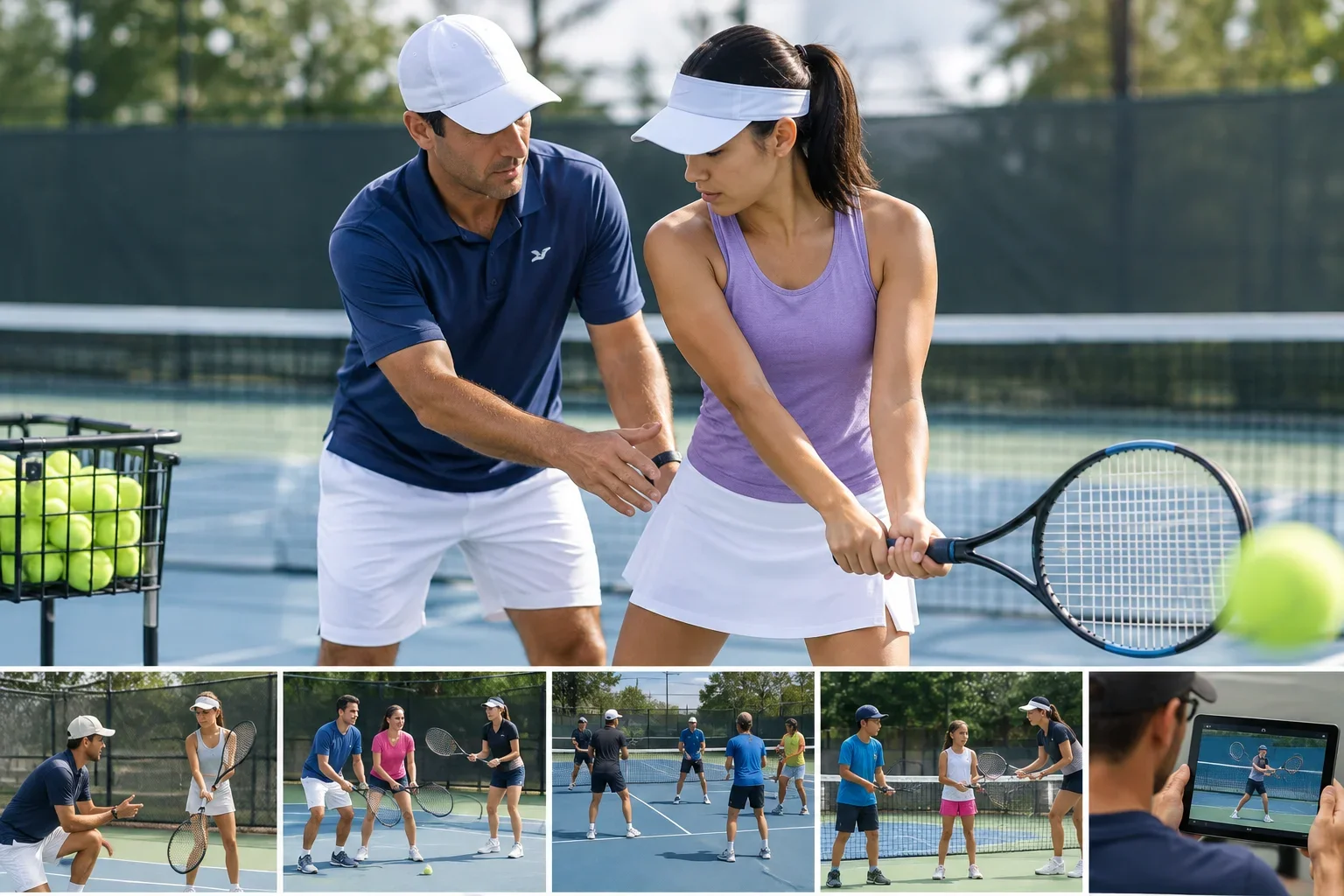
Image credit: ChatGPT
Whether you’re picking up a racket for the first time or trying to shake a stroke flaw that’s held you back for years, the right coach can fast-track your progress — and the wrong one can waste your money and reinforce bad habits. Here’s how to find a coach who actually fits your game, and what you should realistically expect to pay.
Types of Tennis Lessons
Not all lessons are created equal, and picking the right format matters as much as picking the right coach.
- Private lessons — one-on-one with a coach, fully tailored to your game. Best for fixing specific technical issues or fast progress, but the most expensive per hour.
- Semi-private lessons — split with one or two other players at a similar level. Cuts the cost significantly while still getting individual attention.
- Group clinics — 4–8 players working on drills together. Budget-friendly and great for match-play skills, footwork, and fitness, but less individualized feedback.
- Junior development programs — structured, often multi-week programs for kids, usually run through clubs or park-district programs.
- Video/remote coaching — you send swing videos for feedback. Inexpensive and convenient, but no substitute for in-person correction on footwork and timing.
If you’re brand new to the game, start with a few private lessons to build correct fundamentals, then shift to group clinics for ongoing practice and cost savings.
How to Find the Right Coach
1. Check certifications
Look for coaches certified through the USPTA (U.S. Professional Tennis Association) or PTR (Professional Tennis Registry) — the two main certifying bodies in the U.S. Certification isn’t a guarantee of a good fit, but it confirms a baseline of training standards and ongoing education.
2. Match coaching style to your goals
Some coaches specialize in beginners and footwork fundamentals; others focus on competitive junior development or adult tournament players. Ask directly: “What kind of player do you usually work with?” A mismatch here is the most common reason lessons don’t go well.
3. Ask for a trial lesson
Most coaches will do a single lesson before you commit to a package. Use it to gauge:
- Do they explain why a correction matters, not just what to change?
- Do they adjust their teaching style based on how you’re responding?
- Do you feel comfortable asking questions?
4. Watch them coach someone else first, if you can
Many clubs allow you to observe a lesson in progress. Watching how a coach communicates with another student tells you a lot before you spend a dime.
5. Ask about court and ball-machine access
Some coaches include court time in their rate; others expect you to book and pay for the court separately. Clarify this upfront — it changes the real cost per lesson significantly.
What Tennis Lessons Should Cost
Pricing varies a lot by region, coach experience, and whether you’re at a public park, a private club, or working with a touring-level coach. As general ranges across the U.S.:
| Lesson Type | Typical Cost |
|---|---|
| Private lesson (local pro/club coach) | $50–$100/hour |
| Private lesson (high-level/ex-college or touring coach) | $100–$200+/hour |
| Semi-private lesson (per person) | $35–$70/hour |
| Group clinic (per person) | $20–$40/session |
| Junior group programs | $100–$300/month |
| Video/remote coaching review | $20–$50 per session |
A few things that push price up:
- Location — lessons in major metro areas (NYC, LA, SF) run noticeably higher than suburban or rural rates.
- Credentials — former college or pro players, and high-performance coaches, charge a premium.
- Court fees — private clubs often tack on court rental separately from the coaching fee.
- Package discounts — buying 5–10 lesson packages usually saves 10–20% over paying per session.
Red Flags to Watch For
- No clear explanation of what a lesson package includes (court time? balls? makeup policy for cancellations?).
- Pressure to commit to a long, expensive package before a trial lesson.
- A coach who only drills without ever explaining technique — fine for match practice, not for skill-building.
- No cancellation/weather policy in writing.
Getting Started
The fastest way to find qualified coaches near you is through:
- Your local tennis club or park-district recreation program
- The USTA “Find a Coach” or regional section website
- USPTA/PTR coach locator tools
- Recommendations from other players at public courts — often the most reliable source for honest feedback on coaching style
Start with one trial lesson, be upfront about your goals and budget, and don’t be afraid to try a second coach if the first isn’t the right fit. The right coach isn’t necessarily the most expensive one — it’s the one whose teaching style matches how you actually learn.
Comments
No approved comments yet.
Log in or sign up to join the conversation.