
Tennis Shoes 101: Outsoles, Cushioning, and Uppers Explained
Understand how tennis shoe outsoles, midsoles, and uppers work together to provide grip, cushioning, and lateral support for your court surface and playing style.
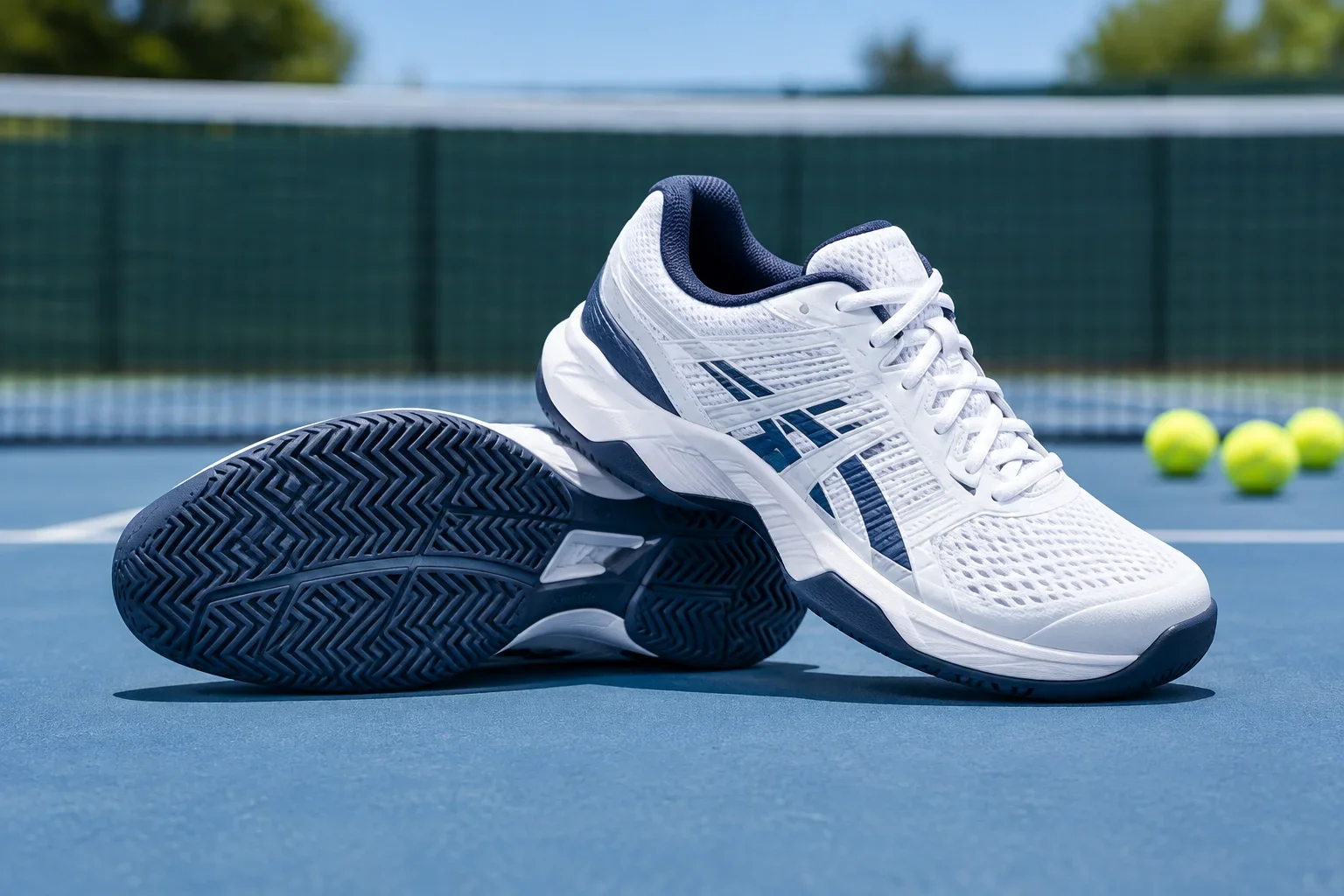
Image credit: ChatGPT
Tennis shoes look simple from the outside, but they’re built from three distinct systems working together: the outsole (grip and durability), the midsole (cushioning and support), and the upper (fit and lateral stability). Understanding how each one works makes it much easier to pick the right shoe for your court surface, foot type, and playing style — instead of just grabbing whatever’s on sale.
The Outsole: Where Grip Meets the Court
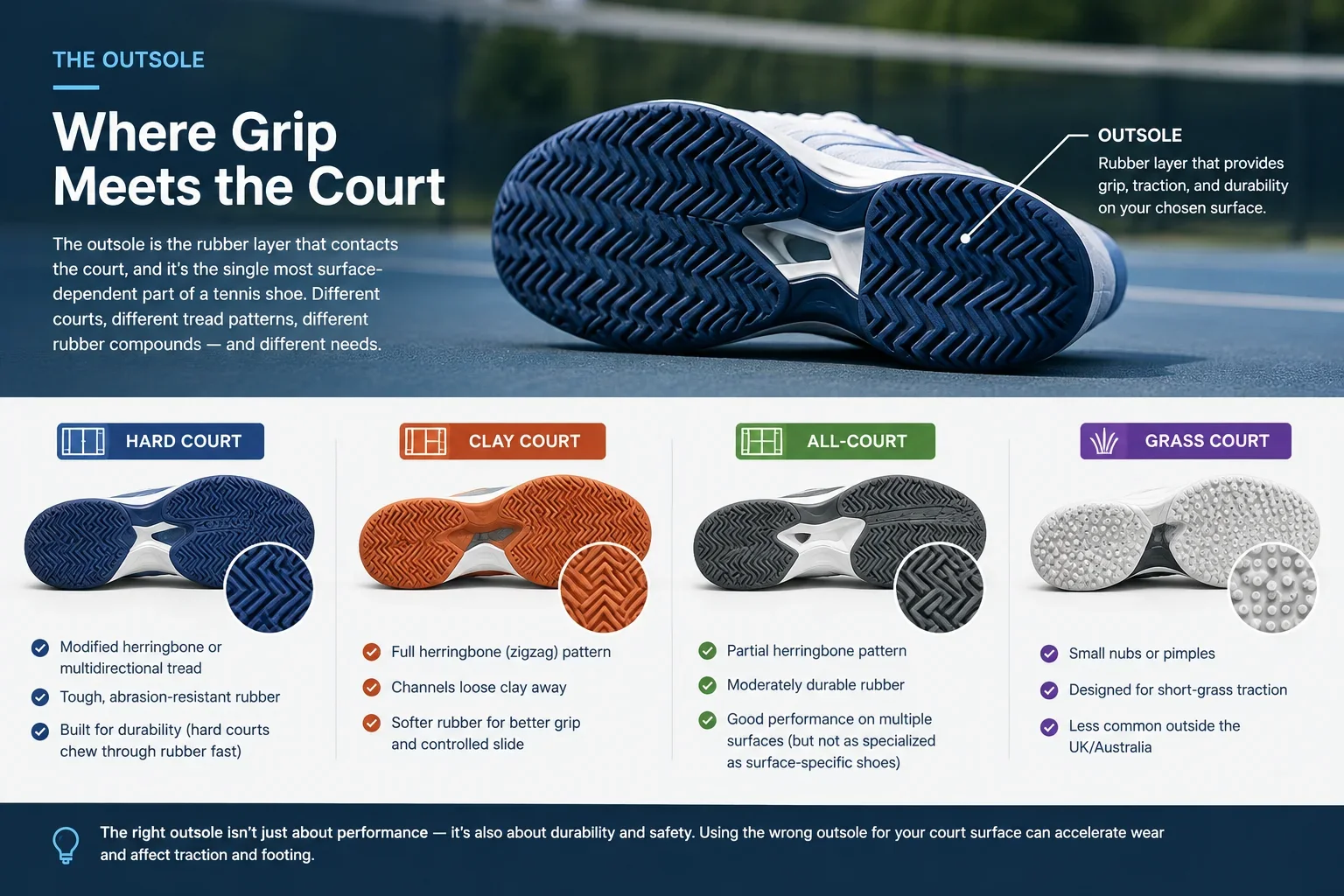
The outsole is the rubber layer that contacts the court, and it’s the single most surface-dependent part of a tennis shoe.
- Hard-court outsoles use a modified herringbone or multidirectional tread with tougher, more abrasion-resistant rubber. Hard courts (asphalt- or concrete-based) chew through rubber fast, so durability is the priority here.
- Clay-court outsoles use a full herringbone (zigzag) pattern that channels loose clay away from the sole, maintaining grip while still allowing the controlled slide that clay-court play depends on. The rubber is typically softer than hard-court compounds.
- All-court outsoles blend the two: a partial herringbone pattern with moderately durable rubber. They perform reasonably on both surfaces but won’t match a surface-specific shoe on its intended court.
- Grass-court outsoles (less common outside the UK/Australia) use small nubs or pimples rather than herringbone, designed for short-grass traction rather than sliding.
Playing on the wrong outsole for your surface isn’t just a performance issue — it accelerates wear dramatically and can affect traction and footing.
The Midsole: Cushioning and Shock Absorption
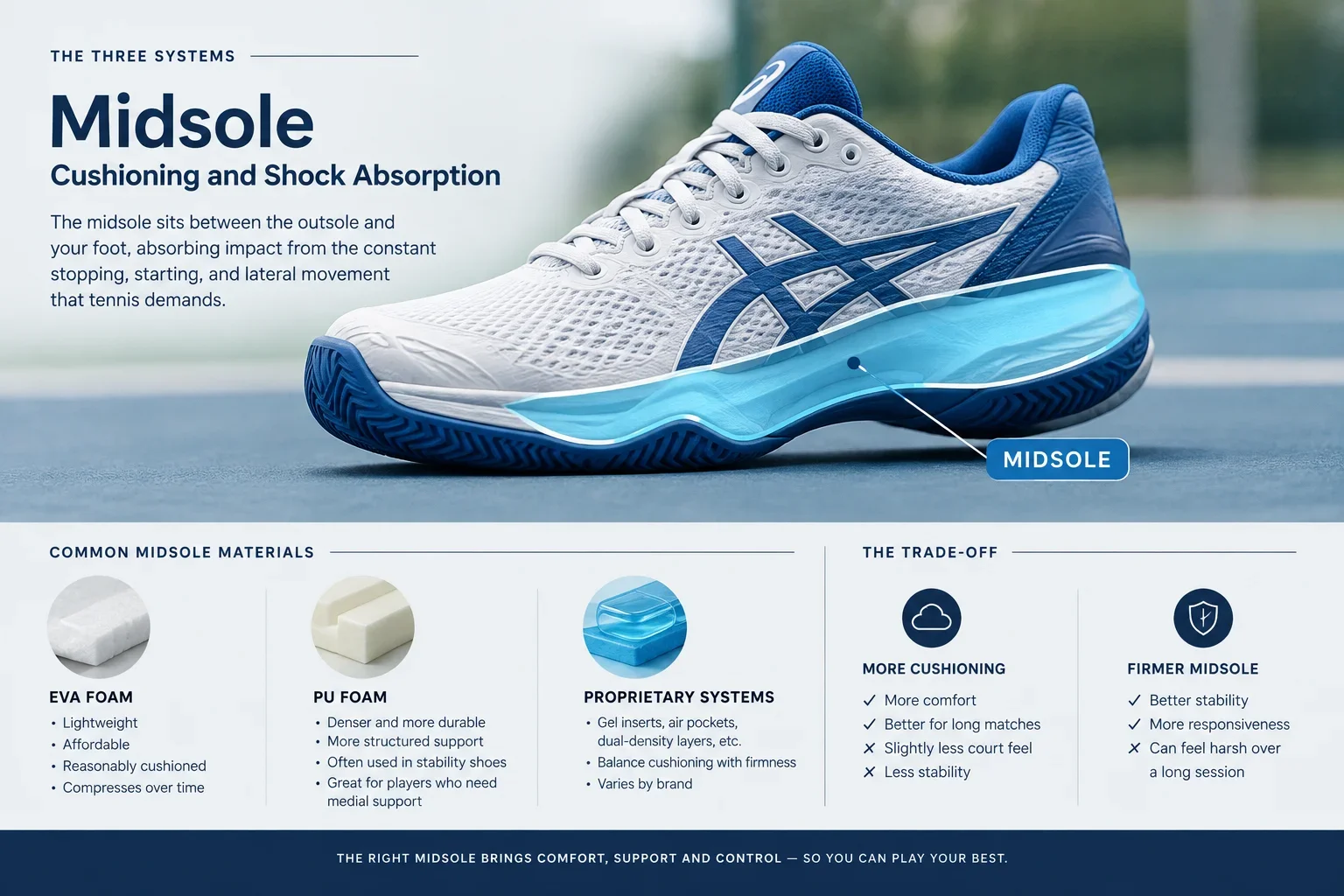
The midsole sits between the outsole and your foot, and it’s doing the real work of absorbing impact from the constant stopping, starting, and lateral movement tennis demands.
- EVA foam is the most common midsole material — lightweight, affordable, and reasonably cushioned, though it compresses over time and loses responsiveness.
- Polyurethane (PU) foam is denser and more durable than EVA, offering more structured support, often used in stability-focused shoes for players who need more medial support.
- Proprietary cushioning systems (gel inserts, air pockets, dual-density foam layers) vary by brand, generally aiming to balance cushioning with the firmness needed for quick directional changes — tennis shoes trade some of the plush cushioning of running shoes for more lateral stability.
Cushioning amount is a genuine trade-off: more cushioning means more comfort on long matches but slightly less court feel and stability for fast direction changes; firmer midsoles give better stability and responsiveness but can feel harsh over a long session.
The Upper: Fit, Breathability, and Lateral Support
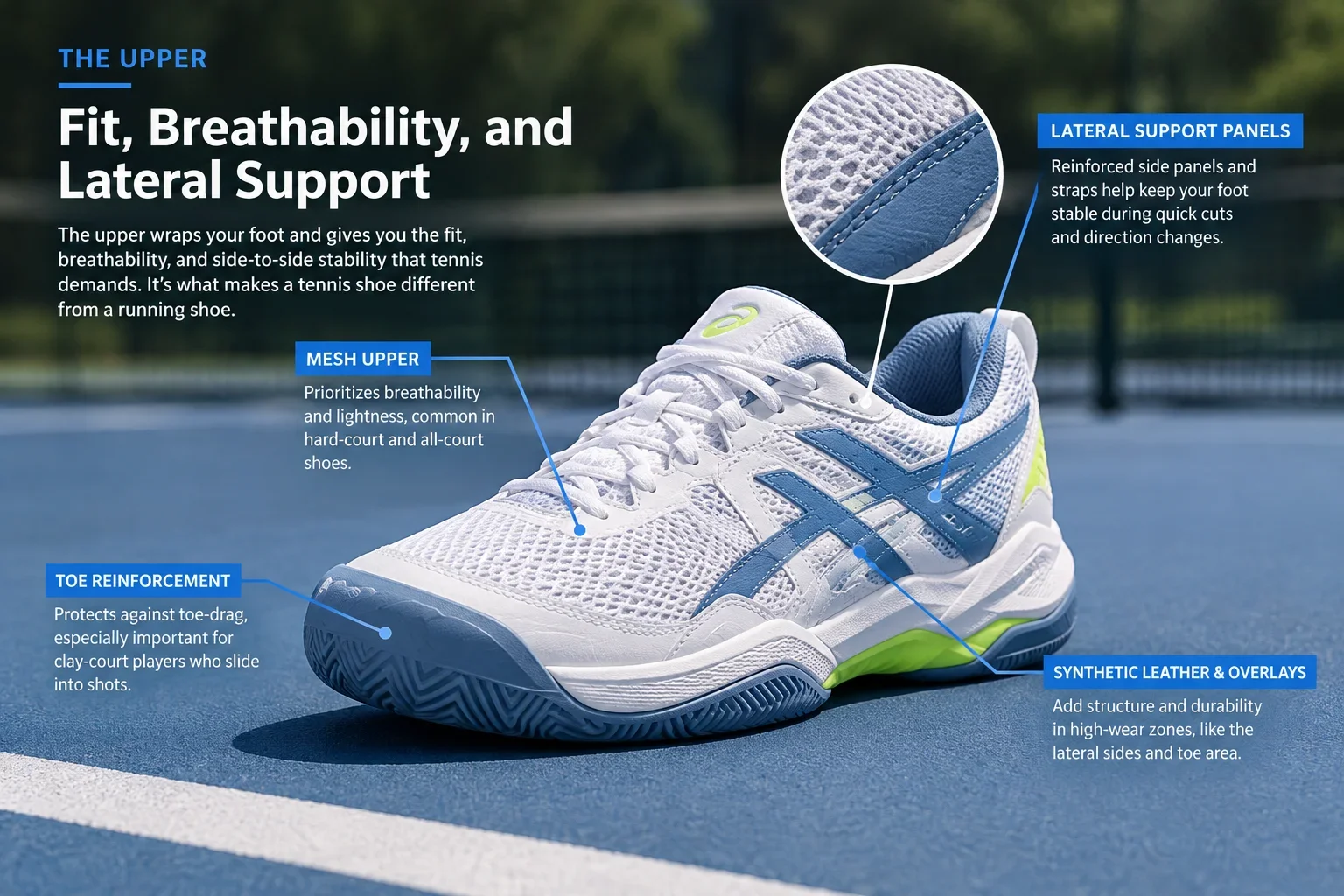
The upper wraps your foot and is what makes a tennis shoe different from a running shoe at a structural level — tennis involves far more side-to-side loading than running does.
- Mesh uppers prioritize breathability and lightness, common in hard-court and all-court shoes for warm-weather play.
- Synthetic leather or reinforced overlays add structure and durability in high-wear zones (toe drag area, lateral sides), common in clay-court shoes and for players with aggressive sliding or dragging habits.
- Lateral support panels/straps — reinforced side panels, sometimes with extra lacing or wrap-around straps — resist the foot sliding inside the shoe during hard cuts and direction changes. This is the feature that most separates tennis shoes from running shoes, which aren’t built to handle that lateral load at all.
- Toe reinforcement (toe cap/bumper) protects against toe-drag, especially important for clay-court players who slide into shots.
How the Three Systems Work Together
A good tennis shoe isn’t just “good cushioning” or “good grip” in isolation — it’s the combination that matters for your specific game:
- Baseliners who slide and grind out points benefit from durable clay or all-court outsoles, moderate cushioning, and reinforced toe/lateral uppers.
- Serve-and-volley or aggressive net players benefit from firmer, more responsive midsoles and strong lateral support for quick first-step movement.
- Players switching surfaces often should lean toward all-court outsoles rather than compromising durability on a surface-specific shoe.
What’s Next
Once you understand these three systems, picking a specific pair comes down to matching them to your court surface, foot shape, and play style. That’s exactly what we’ll cover in the full buying guides — starting with the best shoes for hard courts and clay courts specifically.
Comments
No approved comments yet.
Log in or sign up to join the conversation.