

DUPR Explained: How Pickleball Ratings Work and How to Improve Yours
Understand how DUPR pickleball ratings are calculated, what 3.0, 3.5 and 4.0 mean, how the reliability score works, and how to improve your rating the right way.
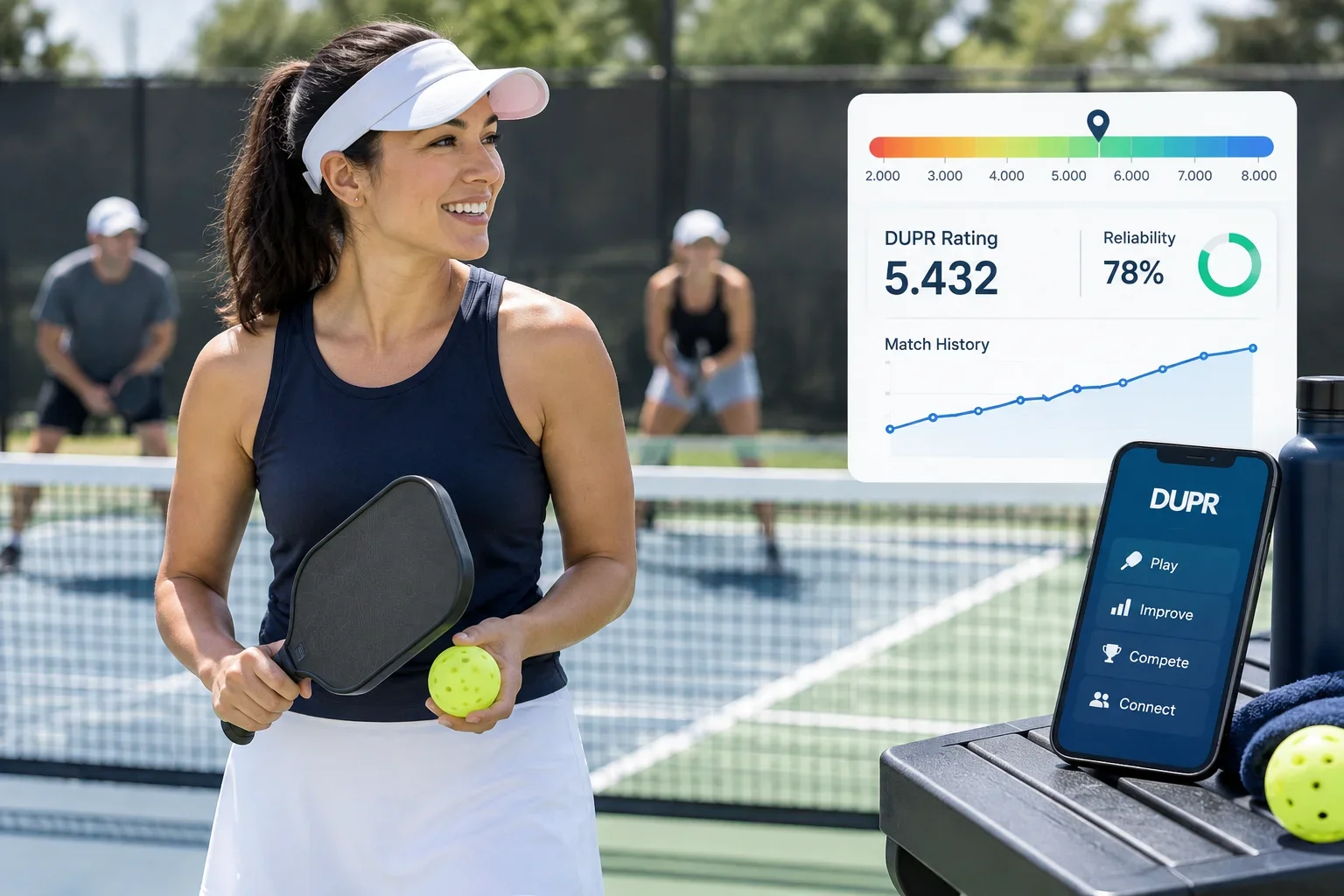
Image credit: ChatGPT
DUPR, the Dynamic Universal Pickleball Rating, is the most widely used rating system in pickleball. It gives every player a number from 2.000 to 8.000 based on their actual match results, not on a self-assessment or a skills checklist. Clubs, leagues and tournaments use it to group players by level.
This guide explains how DUPR calculates your rating, what the numbers mean, what the reliability score is, and how to improve your rating the right way: by playing better, not by gaming the system.
The short answer
- Scale: 2.000 (beginner) to 8.000 (top professionals). New players show as "NR" (not rated) until they have results.
- How it's calculated: from the scores of your matches, compared with what was expected based on everyone's ratings going in.
- Singles and doubles are rated separately.
- Reliability score: a separate percentage showing how confident the system is in your rating. More recent matches mean higher reliability.
- Verified results count more than self-reported recreational matches.
What the numbers mean
DUPR levels don't line up exactly with the older self-rating scales, but they're broadly similar. Use this as a rough guide:
| DUPR | Typical player |
|---|---|
| 2.000–2.999 | New to the game. Learning to serve, return and keep score. |
| 3.000–3.499 | Can sustain short rallies and is learning to dink and move up to the kitchen line. |
| 3.500–3.999 | Consistent serves and returns, starting to use the third-shot drop and play the soft game. |
| 4.000–4.499 | Solid all-round player. Patient at the net, good resets and fewer unforced errors. |
| 4.500–4.999 | Advanced. Controls pace, attacks well and plays strong tournament pickleball. |
| 5.000+ | Elite amateurs and professionals. |
Want a starting point before you have results? Our pickleball skill level estimator gives an informal estimate. It's not a DUPR rating, but it can help you choose the right open play sessions.
How DUPR calculates your rating
Before each match, the system predicts a result based on the players' current ratings. In doubles, it uses the average rating of each team. After the match, it compares the actual score with the prediction:
- If you do better than expected, your rating goes up.
- If you do worse than expected, it goes down.
- The score matters, not just the win. Losing 11–9 to a much stronger team can raise your rating. Beating a much weaker team 11–9 can lower it.
Recent matches count more than older ones, so your rating reflects your current level. A few other factors affect how much each match counts:
- Verified matches from clubs, leagues and tournaments generally have more impact than self-reported recreational games.
- Self-reported matches need to be confirmed by the other players before they count.
- Your reliability score affects how quickly your rating moves. New players' ratings tend to move faster.
DUPR updates its methods from time to time. For the current details, see How DUPR works on the official site.
The reliability score
Your reliability score, shown as a percentage, tells organizers how much to trust your rating. It goes up as you play more matches, against a variety of opponents, and it goes down when your results are old.
Many clubs and organizers set a minimum reliability for DUPR-based leagues and events, often around 60%. If yours is low, the fix is simple: play more recorded matches, especially in leagues or events that submit results.
How to get a DUPR rating
- Create an account on the DUPR website or app.
- Play recorded matches. Join DUPR-connected leagues, round robins, ladders or tournaments, which submit results for you.
- Add recreational matches if you want, with all four players confirming the score.
- Keep playing. Your rating and reliability settle after you have a good number of recent matches.
How to improve your DUPR (the right way)
The only reliable way to raise your rating is to win more points against good players. Some practical tips:
- Play opponents at or above your level. Close losses to stronger players can help your rating, and they're the fastest way to improve.
- Every point counts. Because the score matters, keep competing even when a game seems lost. Cutting a 3–9 deficit to 8–11 makes a difference.
- Reduce unforced errors. At most levels, games are lost more than they're won. Improve your third-shot choice with Third-Shot Drop vs. Drive.
- Play regularly. A steady stream of matches keeps your reliability high and your rating current.
- Don't avoid matches to protect your number. A rating that reflects your real level gets you better-matched games, and those are more fun.
DUPR etiquette
- Agree before you start whether a game will be recorded for DUPR.
- Report scores accurately, and confirm other players' submissions promptly.
- Don't sandbag (deliberately playing below your level to keep a low rating). It ruins events for everyone, and organizers notice.
- Remember that a rating is a guide, not a judgment. Some of the best open play partners are the ones who don't care about their number.
FAQ
Is DUPR the same as a USA Pickleball rating?
No. DUPR is an independent rating system. Many clubs, leagues and events use it, but some use other rating systems, so check which one your event requires.
Why did my rating go down after a win?
Because you won by less than expected. If your team was rated much higher, the system expected a bigger margin.
Do singles and doubles count toward the same rating?
No. DUPR keeps separate singles and doubles ratings.
How does DUPR compare with tennis ratings?
It's similar in spirit to UTR in tennis, which also uses match results. NTRP is more of a skills-based description. See NTRP Ratings Explained.
Keep learning
- Find players at your level with our pickleball player directory, or join an open play session.
- Thinking about organized play? Read League or Ladder?
- New to the game? Start with Pickleball 101.
Comments
No approved comments yet.
Log in or sign up to join the conversation.