
One-Handed vs. Two-Handed Backhand: Which Is Right for You?
Compare one-handed and two-handed tennis backhands: learning curve, stability, reach and variety, technique tips for each, and how to choose.
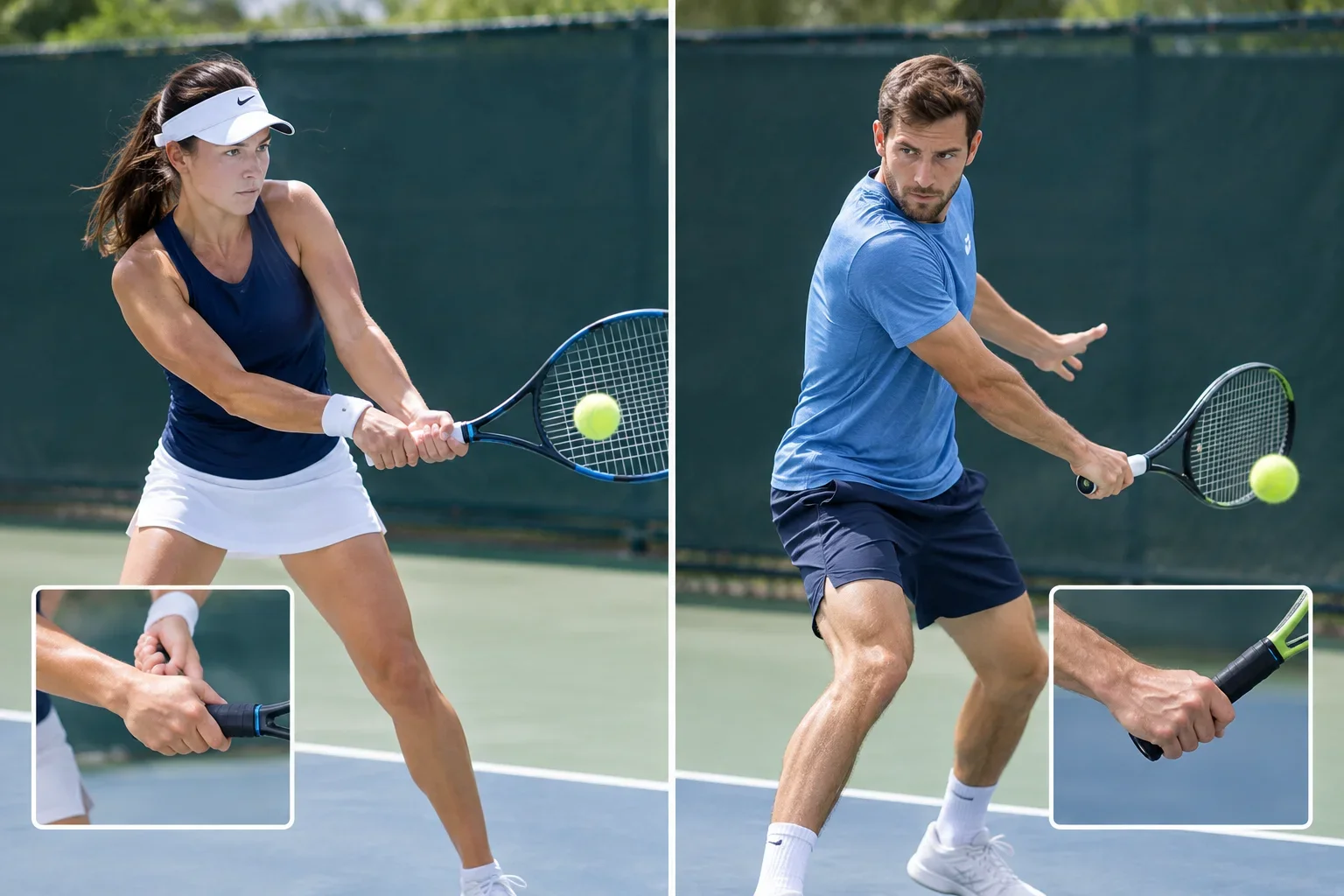
Image credit: ChatGPT
Most players today learn a two-handed backhand, because it's more stable and easier to master. The one-handed backhand offers more reach and variety, and a classic look, but it takes more strength and timing to hit well. Neither is "right." The best choice depends on your strength, your game and how much time you can put into learning it.
The comparison
| Two-handed | One-handed | |
|---|---|---|
| Learning curve | Easier for most players | Harder; takes longer to get consistent |
| Stability against pace | Very stable | Less stable, especially against heavy balls |
| High balls | Easier to handle | Difficult, especially high topspin |
| Reach | Less reach on wide balls | More reach |
| Slice and volleys | Players still use one hand for these | Natural transition to slice and volleys |
| Disguise and variety | Good | Excellent |
| Strength needed | Less | More, in the shoulder and forearm |
The two-handed backhand
The two-handed backhand is often described as a non-dominant forehand, with the dominant hand helping. For a right-hander, the left hand does much of the work.
- Grip: commonly, a continental grip with the bottom (dominant) hand and an eastern forehand grip with the top hand. See Tennis Grips Explained.
- Strengths: stable against fast balls, good on returns and easier to hit high balls.
- Watch for: less reach. Good footwork is needed to get to wide balls.
Key technique points
- Turn your shoulders early, so your back is partly toward the net.
- Use your legs and hip rotation.
- Swing low to high, making contact in front of your front hip.
- Finish high, over your dominant shoulder.
The one-handed backhand
- Grip: eastern backhand, with the index knuckle on the top bevel.
- Strengths: reach, variety (topspin, slice and drives from the same setup) and an easy transition to the net.
- Watch for: high balls to the backhand, which are hard to control. Many one-handers step back, take the ball earlier or slice.
Key technique points
- Turn your shoulders fully, using your non-hitting hand to support the racquet at the throat.
- Make contact well in front of your front foot, further forward than on a two-hander.
- Keep your non-hitting arm back as you swing, to stay balanced and keep your shoulders sideways.
- Finish with your hitting arm extended, high and toward the target.
Whichever backhand you use, learn a one-handed slice too. It's essential for defense, approach shots and changing pace. See Topspin vs. Slice.
Which should you choose?
- Beginners and juniors: two-handed is usually easier, especially for kids, who may lack the strength for a one-hander.
- Adults with an existing one-hander: keep it, and work on handling high balls.
- Players with shoulder or elbow problems: two hands can spread the load, but technique and equipment matter more. See Tennis Elbow.
- Players who love the net: a one-hander makes the move to volleys and slice more natural.
Should you switch?
Switching is a big project, often taking months. Consider it only if your current backhand clearly limits your game, and work with a coach if you can. For most club players, improving their existing backhand is a better use of time.
FAQ
Is the one-handed backhand dying out?
It's less common than it once was, at all levels, but many players still use it successfully and it remains a valid choice.
Can I hit both?
Many two-handers use one hand for slice, volleys and very wide defensive balls. That's a practical mix.
What about pickleball backhands?
Most pickleball players use one hand, because the shots are shorter and there's less time. Some use a two-handed backhand drive, so a longer paddle handle helps. See How to Choose a Pickleball Paddle.
Keep learning
- Practice your backhand alone with Tennis Drills You Can Do Alone.
- Fix your other side too: The Tennis Forehand: 6 Fixes for Club Players.
- Find a practice partner in our player directory.
Comments
No approved comments yet.
Log in or sign up to join the conversation.