
What to Eat Before and During a Tennis or Pickleball Match
A simple match-day nutrition plan for tennis and pickleball: what to eat before, during and after play, plus tips for tournament days with several matches.
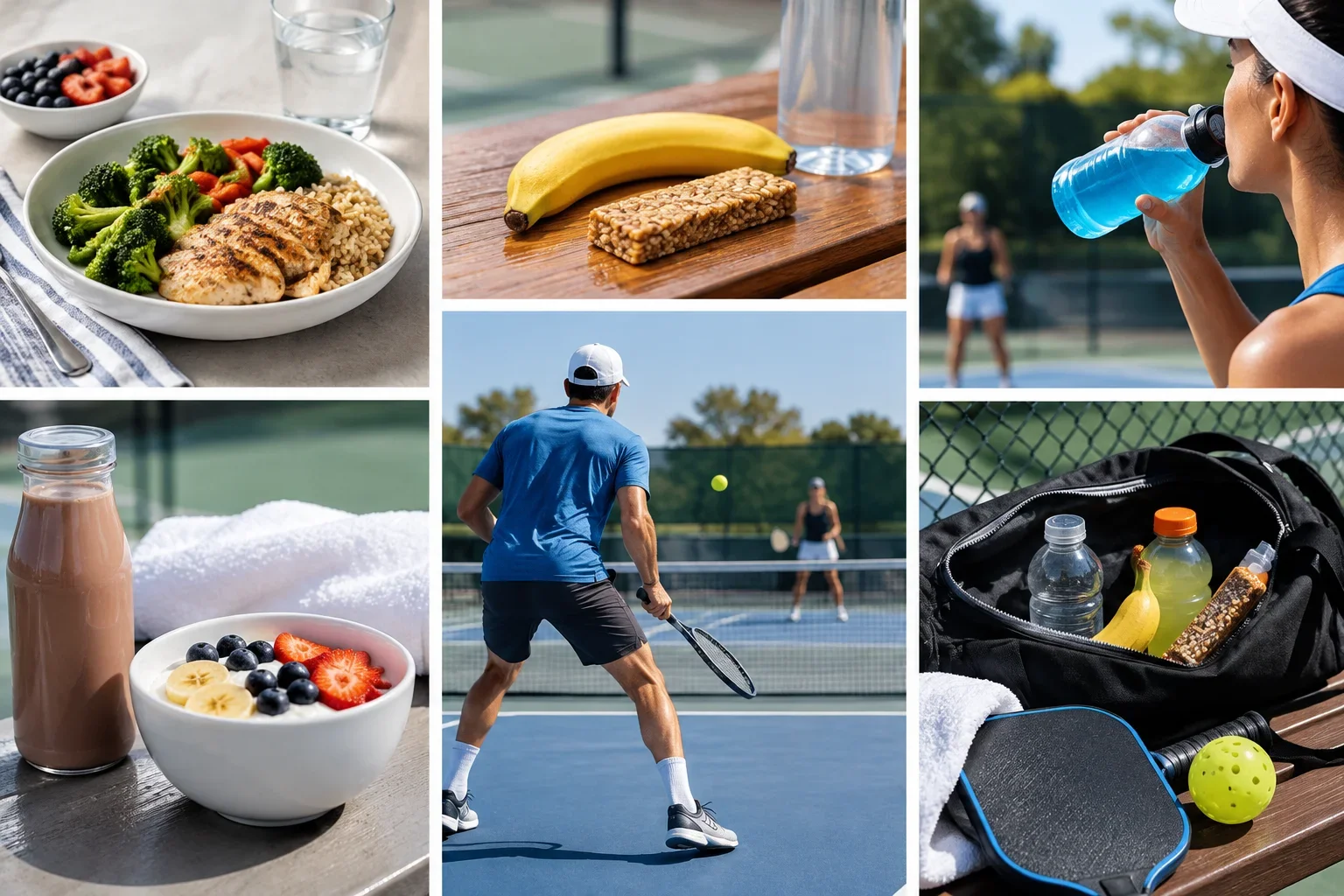
Image credit: ChatGPT
What you eat and drink around a match affects how you feel in the third set or the last game. The basics are simple: eat a balanced meal a few hours before, have a light snack closer to playing, fuel during long matches, and recover afterward. Don't try anything new on match day.
This guide covers match-day nutrition for tennis and pickleball players, including tournament days with several matches.
This is general guidance, not personal nutrition or medical advice. If you have diabetes, food allergies, a medical condition or specific dietary needs, check with a doctor or registered dietitian.
The match-day timeline
| When | What | Examples |
|---|---|---|
| 2–4 hours before | A balanced meal, mostly carbohydrate with some protein, low in fat and fiber | Pasta with chicken, rice bowl, oatmeal with fruit, turkey sandwich |
| 30–60 minutes before | A small, easy-to-digest snack | Banana, granola bar, toast with honey |
| During (matches over about an hour) | Fluids, plus carbohydrates and electrolytes | Sports drink, banana, energy chews or gels |
| Within a couple of hours after | Carbohydrate and protein to recover | Chocolate milk, yogurt with fruit, a full meal |
Before you play
- Eat your main meal 2–4 hours before so it's digested by the time you play.
- Focus on carbohydrates for energy, with some protein. Go easy on fat and fiber, which digest slowly.
- Have a small snack closer to the match if you're hungry.
- Drink fluids steadily in the hours before, rather than a lot all at once.
During play
For matches under about an hour, water is usually enough. For longer matches, or in the heat, add carbohydrates and electrolytes.
- Sip at every changeover, rather than drinking a lot at once.
- Take small amounts of carbohydrate during long matches, such as a few bites of a banana or a sports drink. Sports nutrition guidelines commonly suggest about 30–60 grams of carbohydrate per hour for long sessions.
- Replace salt if you sweat heavily, with a sports drink or electrolyte tablets.
In hot weather, hydration matters even more. See Playing Tennis and Pickleball in the Heat.
Pack your match bag the night before: water bottle, sports drink or electrolyte tablets, and two or three easy snacks. Then you're not relying on whatever the venue has.
Tournament days with several matches
- Between matches, eat small amounts of easy food, such as a sandwich, fruit or a granola bar, rather than a large meal.
- Plan for the gap. If you have under an hour, stick to snacks and fluids. With two hours or more, a light meal is fine.
- Rehydrate after each match, before you get thirsty.
- Keep food simple and familiar. A tournament isn't the time to try a new energy gel.
Getting ready for your first event? See How to Prepare for Your First Tournament.
After you play
- Eat carbohydrate and protein within a couple of hours to refuel and help your muscles recover.
- Keep drinking. Replace the fluid you lost.
- Cool down and stretch lightly.
Common mistakes
- Playing on an empty stomach, especially in the morning.
- Eating a large, heavy meal right before playing.
- Trying new foods or supplements on match day.
- Waiting until you're thirsty to drink.
- Too much caffeine, which can make some people jittery or dehydrated.
FAQ
Are bananas really good for tennis?
Yes. They're easy to digest, portable and a good source of carbohydrate. Many players eat a few bites during changeovers in long matches.
Do I need sports drinks?
For short, casual sessions, water is enough. For long matches, hot conditions or heavy sweating, a sports drink or electrolytes can help.
What about caffeine?
A moderate amount, such as your normal morning coffee, is fine for most people. Avoid large amounts if you're not used to them.
Keep learning
- Prepare your body before playing with the 10-minute warm-up.
- Build strength off the court with Strength Training for Players Over 40.
- Find your next match through open play or our player directory.
Comments
No approved comments yet.
Log in or sign up to join the conversation.