
Pickleball Singles Strategy: How It Differs From Doubles
How pickleball singles differs from doubles, and the serve, return, third-shot, passing-shot and positioning patterns that win singles points.
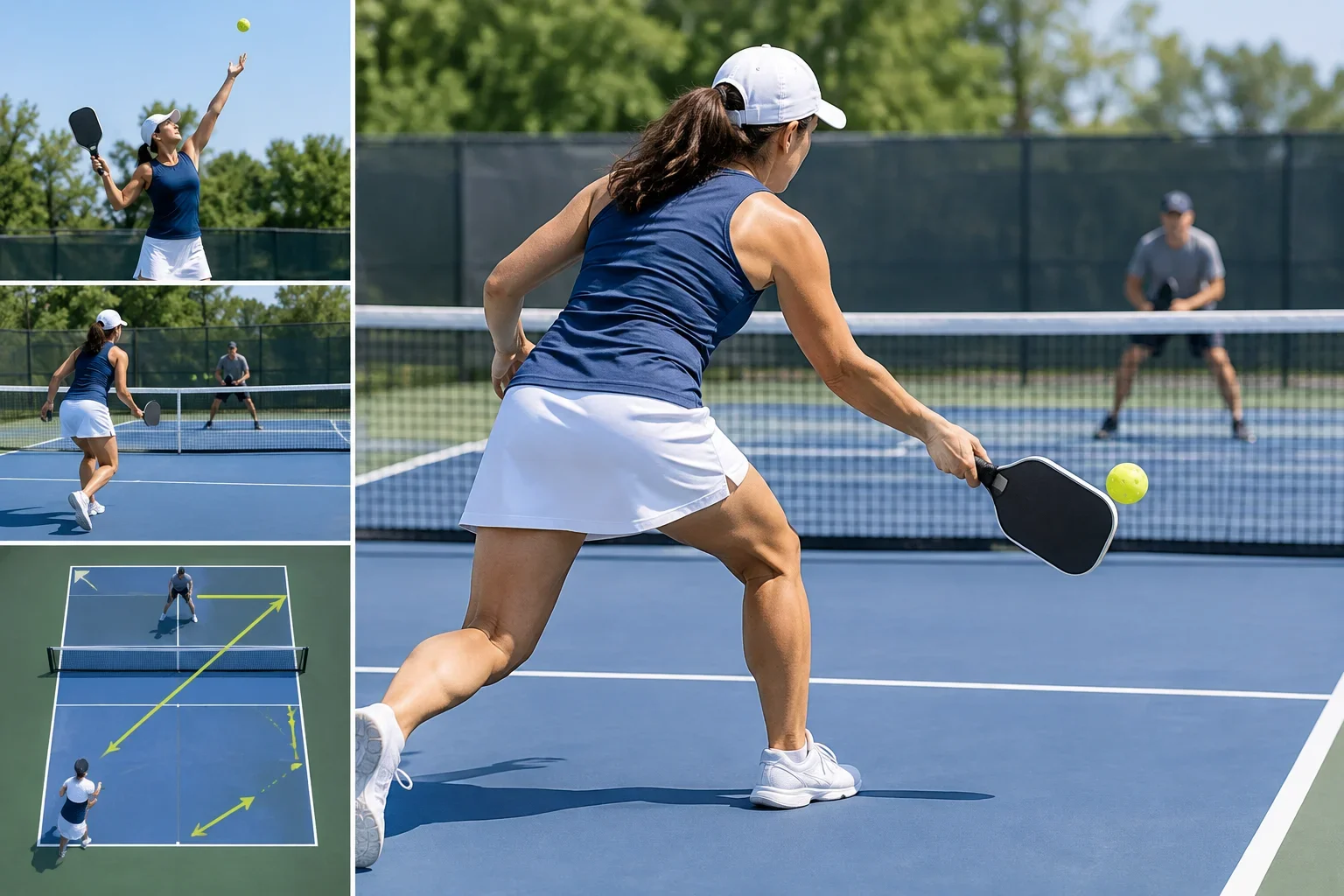
Image credit: ChatGPT
Pickleball singles is a different game from doubles. With the whole court to cover on your own, the soft game matters less and serves, returns, passing shots and movement matter more. Many doubles habits, like dinking patiently and waiting for a pop-up, can lose you singles points.
This guide covers the key differences and the patterns that win singles points.
How singles differs from doubles
| Doubles | Singles | |
|---|---|---|
| Main battle | The soft game at the kitchen line | Serve, return, passing shots and movement |
| Serve and return | Mostly about getting the ball in deep | A deep, aggressive serve and return set up the point |
| Third shot | Often a drop | More often a drive or deep approach |
| Fitness | Moderate | Much more demanding |
| Scoring | Same game format; in singles, the server serves from the right when their score is even and the left when it's odd, and there's no server number | |
Serve deep
In singles, a deep serve keeps your opponent at the baseline, which makes it harder for them to get to the net. Aim for depth first, then add placement to their weaker side. A short serve lets them hit an aggressive return and move forward quickly.
Check the serving rules in Pickleball Serving Rules.
Return deep and come in
The returner has the advantage in singles, as in doubles. Hit a deep return, ideally to the backhand corner, then move forward to the kitchen line right away. The server has to let your return bounce, so they'll be behind you in the race to the net.
A high, deep, slow return can be better than a fast one. It gives you more time to get to the kitchen line before the third shot arrives.
Third shot: drive or approach
In doubles, a third-shot drop helps your team get to the net. In singles, it's riskier, because one opponent at the net can cover a drop more easily than you might expect. Common singles choices:
- Drive deep to a corner, then approach behind it.
- Passing shot down the line if your opponent comes in too quickly.
- Drop only if your opponent is very strong at the net and you have a good drop.
Passing shots and lobs
When your opponent is at the net, they can't cover the whole court. Passing shots down the line and crosscourt, plus the occasional lob, are key singles weapons. Aim low, so they have to volley up.
Court positioning
- Get to the kitchen line as soon as you can. It's still the strongest position.
- Cover the middle of their angles, not just the middle of the court. Shade toward the side they're most likely to hit to.
- Split step as your opponent hits, every time.
Fitness and footwork
Singles is much more physically demanding than doubles. Build up gradually, warm up properly, and use good court shoes to protect your ankles. See Common Pickleball Injuries and Strength Training for Players Over 40.
Practice singles skills
- Skinny singles (half-court singles) is great for practicing transition and movement with a partner. See Pickleball Drills for Two Players.
- Serve and return to targets deep in the corners.
- Passing-shot drill: one player at the net, one at the baseline. The baseline player tries to pass, and the net player volleys.
FAQ
Is singles good for beginners?
It's great for fitness and movement, but most beginners learn faster in doubles, where the soft game develops. Try both.
Which paddle is best for singles?
Many singles players prefer a slightly elongated paddle for reach and power. See How to Choose a Pickleball Paddle.
Does the kitchen rule apply in singles?
Yes, the same as in doubles. See The Kitchen Rule, Explained.
Keep learning
- Find a singles partner in our pickleball player directory.
- Track singles scores with the pickleball scorekeeper.
- See how singles fits into your rating: DUPR Explained.
Comments
No approved comments yet.
Log in or sign up to join the conversation.