
Watching the Pros Like a Coach: 5 Things to Steal From ATP and WTA Matches
Watch ATP and WTA tennis like a coach: five things to look for, from split steps and shot margins to serve patterns, between-point routines and doubles teamwork.
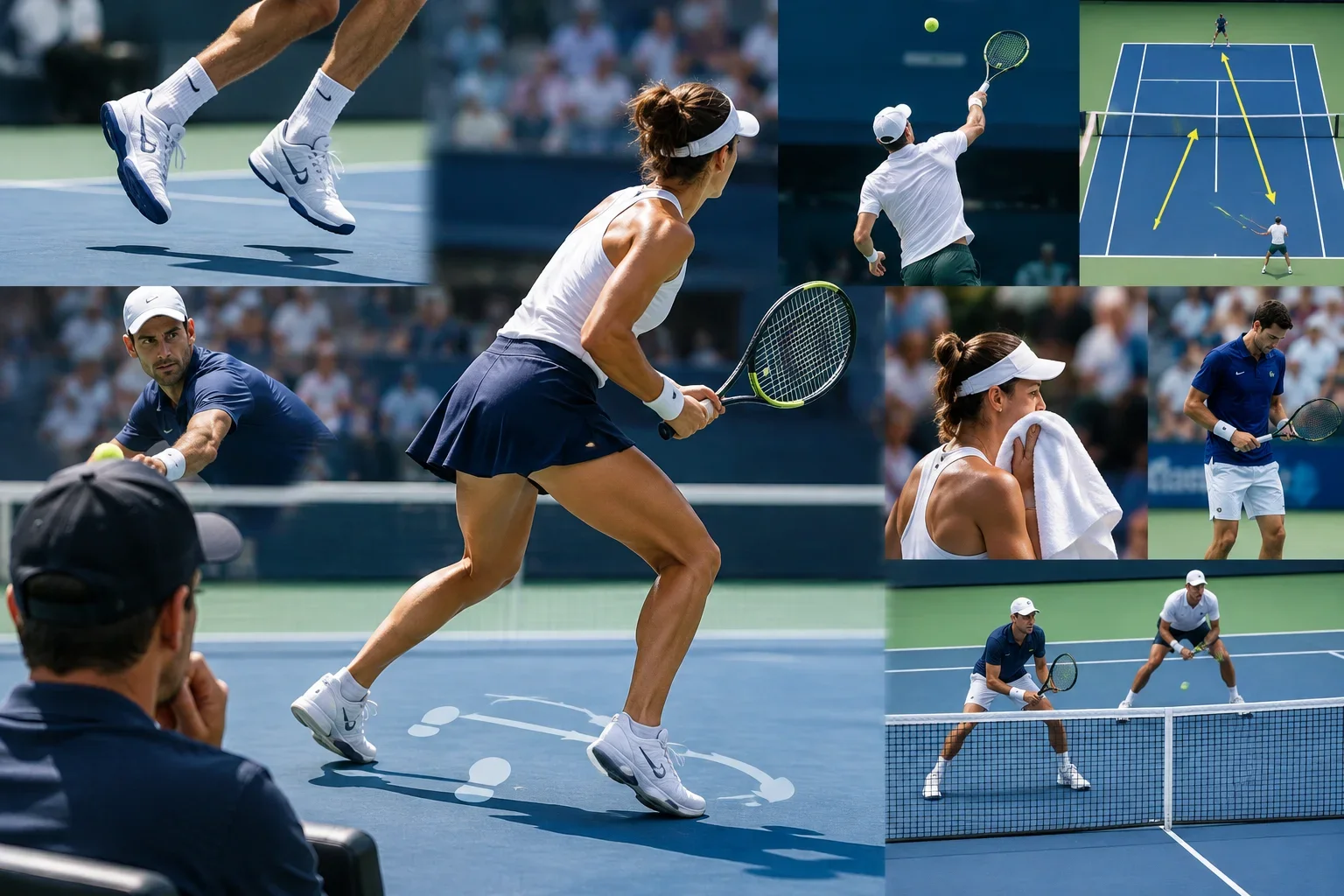
Image credit: ChatGPT
Most people watch pro tennis the way they watch any sport. They follow the ball, enjoy the winners and check the score. Coaches watch differently. They watch feet, patterns and what players do between points, and those are the parts of the pro game recreational players can actually copy.
You'll never hit a forehand like the best players on the ATP or WTA Tour. But you can borrow their footwork habits, their margins, their patterns and their routines. Here are five things to watch for next time a match is on, and how to use each one at your level.
How to watch: a few ground rules
- Watch full matches, not highlights. Highlights show winners. Full matches show the patient rallies, safe shots and errors that decide most points.
- Pick one player and ignore the ball. Watch them for an entire game. It feels odd at first, but it's where you learn the most.
- Watch from behind the baseline. The standard TV camera angle shows depth, height over the net and court position better than any other view.
- Go in person if you can. At tournaments, practice courts are often open to spectators, and watching a pro practice is more useful than watching them play.
1. The split step and recovery
Watch a pro's feet just as their opponent hits the ball. Every time, they make a small hop and land on the balls of their feet as the opponent makes contact. That's the split step. It lets them push off quickly in any direction.
Then watch what they do after they hit. They don't stand and admire the shot. They immediately move back to a position that covers the opponent's likely replies, usually not the exact center of the court, but the middle of the angles the opponent can hit.
What to steal:
- Split step every time your opponent hits, not just when you remember.
- After every shot, take recovery steps before you look to see where your ball landed.
- In doubles, split step at the net when the opposing net player is about to volley.
2. Margin and shot selection
Pros make it look like they're hitting close to the lines. In reality, most rally balls land well inside the court and clear the net by a comfortable margin, often several feet. They hit winners from good positions, not from bad ones.
Watch how a player's shot changes with their position:
| Situation | What pros typically do |
|---|---|
| Defending, pulled wide or deep | Hit high, deep and often crosscourt, to buy time to recover |
| Neutral rally | Hit deep crosscourt with margin, waiting for a shorter ball |
| Attacking, inside the baseline | Change direction, go down the line or approach the net |
What to steal: match your shot to your position. Most club players go for too much from defensive positions. That habit causes more unforced errors than anything else. See Singles Strategy for 3.5 Players for how to apply this.
3. Serve patterns and the first shot after
Watch where a player serves on big points, like break points and 30–all. Many players have a favorite serve, and they use it under pressure. Then watch their next shot. Good servers aren't just hitting a serve. They're setting up the next ball.
Common patterns to look for:
- A wide serve, then the next ball into the open court on the other side
- A serve down the T, then a forehand to the opponent's weaker side
- A body serve on big points, which is hard to return with an aggressive swing
Watch the returner too. Notice where they stand for first and second serves, and how far back they move against a big server.
What to steal: plan your first two shots before you serve. You don't need pro power for the pattern to work. Our 30-day serve plan helps you hit the targets.
4. What happens between points
In pro tennis, there are about 25 seconds between points, and the best players use them deliberately. Watch what they do between the end of one point and the start of the next:
- They turn away from the court after a point, especially after losing one.
- They fix their strings, use the towel or bounce on their toes. These routines calm them and reset their focus.
- They take a few deep breaths before serving or returning.
- Their body language looks about the same whether they won or lost the point.
What to steal: build a short routine of your own. For example, turn away, fix your strings, breathe, and decide where your next serve or return is going. It's one of the fastest ways to stop one bad point from becoming three. Beat Nerves in Match Play has more on routines.
5. Doubles positioning and communication
Pro doubles is the most underrated thing to watch for club players, because recreational tennis is mostly doubles. Watch the net players:
- They move constantly, shifting with the ball and faking toward the middle to distract the returner.
- They poach, crossing to intercept a return, much more often than club players do.
- The team moves together, like they're connected by a rope, so there's never a big gap down the middle.
- Partners talk between almost every point, often with hand signals behind the back before the serve.
What to steal: talk to your partner before every point, even if it's just "I'm staying" or "I'll take the middle." Move with your partner, and try one poach a game. Our guide to doubles positioning mistakes covers the details.
What not to copy
- Their equipment. Pro racquets are often heavier, with stiffer, tightly strung polyester strings. That setup suits their swing speed, not most club players'. See How to Choose Your First Tennis Racquet.
- Their swing size. Full, extreme swings depend on years of training and fitness. Copy the shape, but keep your swing compact enough to be consistent.
- Their shot selection when they're ahead. Pros can afford risky shots that would be low-percentage choices for most of us.
- Their schedule. Pros have physios, coaches and recovery plans. If you play more after watching a big tournament, build up gradually and warm up properly.
Try a "watch and play" week. Watch one set of a pro match, focusing on one of the five things above. Then work on that same thing in your next practice. One idea at a time sticks much better than a list.
FAQ
Are ATP and WTA matches equally useful to watch?
Yes. Many club players find WTA matches especially useful, because the pace and patterns are often closer to what they can use. Pro doubles is the most useful of all for most recreational players.
Is it better to watch live or on TV?
Both. TV gives you replays and the best camera angle for court positioning. In person, you'll see how fast the ball really moves and how much the players move between shots.
Should I watch players with a style similar to mine?
Yes, especially if they're a similar height and play with the same hand and the same type of backhand. Their patterns are more likely to work for you.
Which events should I start with?
The four majors get the most coverage, and they're played on different surfaces, which helps you see how players adapt. See What Is a Grand Slam in Tennis? and how court surfaces change the way you play.
Keep learning
- Follow the tours with our tennis tour and tournament coverage.
- Ready to try it on court? Find a practice partner or join open play.
Comments
No approved comments yet.
Log in or sign up to join the conversation.